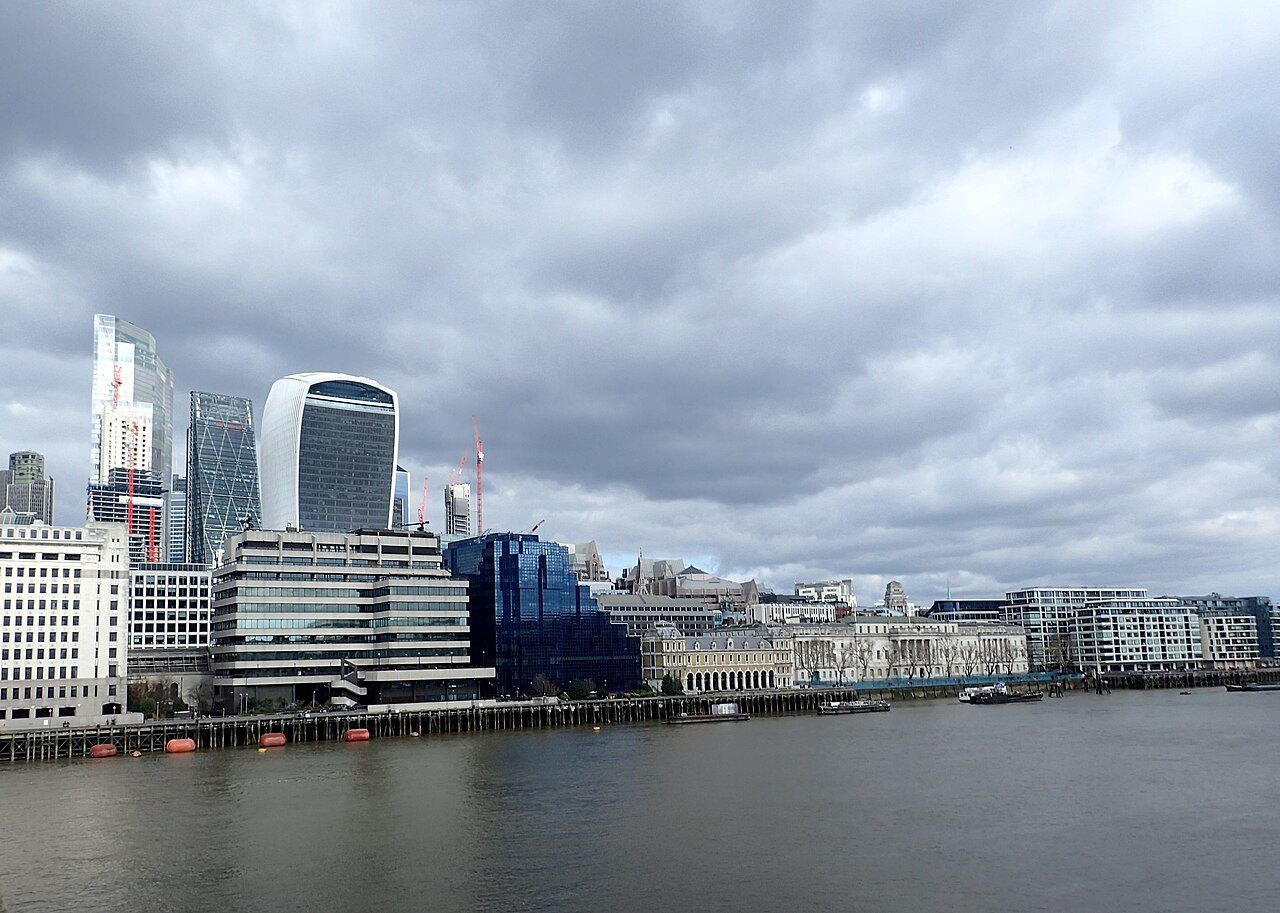
London's commercial property sector is at a crossroads. After three years of structural headwinds—rising gilt yields, persistent inflation, and the post-pandemic shift to hybrid working—the capital's office market is displaying the economic complexity that typically precedes significant repricing.
The headline figures suggest cautious optimism. Institutional investors have deployed approximately £4.2 billion into London commercial real estate across the first half of 2026, according to Knight Frank's latest transaction data, with notable activity concentrated in Mayfair, Fitzrovia, and the tech-heavy neighbourhoods around Shoreditch. This represents a recovery from the subdued 2024-2025 period, when international capital retreated amid geopolitical uncertainty.
However, dig deeper into the economic indicators and the picture fragments. Prime West End office space commands rents of £100-120 per square foot annually, but secondary stock in Vauxhall and Elephant and Castle languishes at £45-55. This divergence—a spread of nearly 200 per cent—reflects a market where quality, location, and ESG credentials have become proxies for financial resilience. Investors are essentially pricing in permanent changes to how London works.
The Bank of England's latest monetary policy settings explain much of this bifurcation. With base rates holding firm at 4.5 per cent to combat stubborn inflation, the cost of debt financing has compressed returns on lower-yielding secondary assets. Meanwhile, the City's financial services sector—which underpins roughly 40 per cent of London's office demand—continues to absorb talent, though at a slower clip than pre-2020 levels. This creates a quality premium that shows no sign of eroding.
Cross-border capital flows tell another story. European pension funds and Middle Eastern sovereign wealth have returned to Canary Wharf and the City, drawn by yield spreads of 4-4.5 per cent on trophy assets—attractive relative to equivalent risks in Frankfurt or Paris. Conversely, North American investors, who dominated London acquisitions a decade ago, remain selective, raising questions about confidence in sterling and UK growth trajectories.
Supply dynamics matter too. With only 1.8 million square feet of new Grade A office space due to complete in central London by 2027—concentrated in King's Cross and the Thames Corridor—scarcity is supporting rents in A-rated buildings. Yet demand forecasts assume corporations continue shedding office footprints at a modest 2-3 per cent annually, a trend that may accelerate if the broader economy slows.
For investors, the message is clear: London's office market isn't uniformly strong or weak. Rather, economic indicators suggest a tiered landscape where capital is highly selective, yields vary dramatically by location and quality, and currency movements carry outsized importance. Those who can afford premium assets continue to find value; everyone else faces a tougher equation.
This article was compiled by AI from the sources linked above and screened before publishing. See our editorial standards.