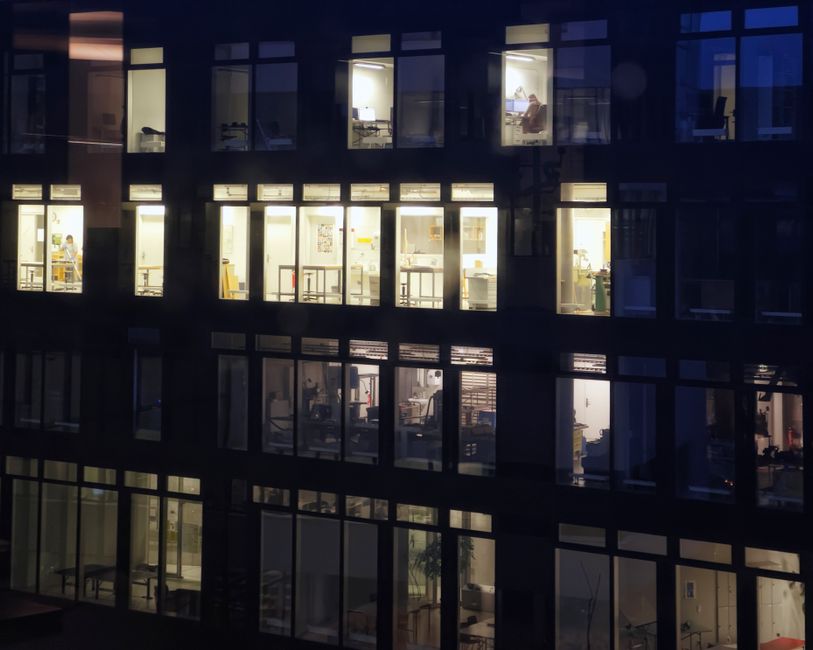
London's office market is in trouble. Vacancy rates across the City of London hit 9.8 percent in the second quarter of 2026, the highest level recorded since 2003, according to data published last week by Cushman & Wakefield. Landlords who spent the past two years betting that a post-pandemic return to the desk would tighten supply are now sitting on empty floors they cannot shift.
The timing matters because the pressures are converging at once. The Bank of England's base rate, still at 4.25 percent despite two cuts this year, has kept refinancing costs punishing for leveraged property owners. Meanwhile, Europe's deteriorating security picture — Russia's continued pressure on its western neighbours, the shock of last month's Monaco attack, and deepening instability across the Middle East following the death of Iran's Supreme Leader — has made multinational tenants cautious about committing to long leases in any market. London is not immune to that caution.
The West End Holds, the Fringe Suffers
The geography of pain is uneven. Trophy addresses in Mayfair and St James's are still attracting premium rents — Grade A space around Berkeley Square is commanding north of £145 per square foot annually — but the divergence between prime and secondary stock has never been sharper. Landlords with older buildings in Southwark, Stratford and parts of the EC2 fringe are facing a brutal choice: spend heavily on retrofits to meet the new EPC B minimum energy standards that came into force in April 2026, or accept that their assets are effectively unlettable to any occupier with a sustainability policy.
British Land, which manages roughly 14 million square feet of London commercial space, told investors in May that its Broadgate campus in the City was 96 percent leased — a genuine bright spot. But the picture at its older Paddington Central holdings is considerably less comfortable, with one 85,000 square foot block on Kingdom Street having sat empty since January. The company declined to give a new asking rent figure, which itself says something.
Smaller landlords face starker arithmetic. A mid-sized office building in Bermondsey Street that sold for £38 million in 2021 recently changed hands at auction for £24.5 million — a 35 percent discount in five years. That kind of repricing is spreading. Property consultancy JLL estimated in June that around £6.2 billion of London office debt is currently in some form of distress or restructuring discussion with lenders.
What Tenants Actually Want Now
Occupier behaviour has genuinely changed and that shift looks permanent. Companies signing leases right now are taking less space per head but spending more per square foot. The preference is for managed, flexible arrangements — serviced offices and co-working providers like WeWork's restructured successor and IWG's Regus brand have seen London enquiries rise 18 percent year-on-year in the first half of 2026. The Helios building on Farringdon Road, which converted entirely to flex space in late 2025, reported full occupancy within four months of reopening.
The energy efficiency retrofit problem is not going away. The Greater London Authority's Retrofit Accelerator programme, which offers grant support and technical advice to commercial landlords, has processed 340 applications since January but the waiting list now runs to six months. Many landlords are simply deferring decisions, which means a growing stock of buildings drifting toward functional obsolescence.
For investors watching from the sidelines, the distress in secondary markets will create buying opportunities — but the window for cheap capital is narrowing as debt costs edge down. Developers and funds with long time horizons and genuine balance sheet strength, like Derwent London, which has historically focused on creative-sector tenants in the EC1 and W1 corridors, are best placed to absorb the next 18 months. The rest will be deciding, block by block and floor by floor, whether to spend their way back to relevance or sell into a market that has already made its judgment.