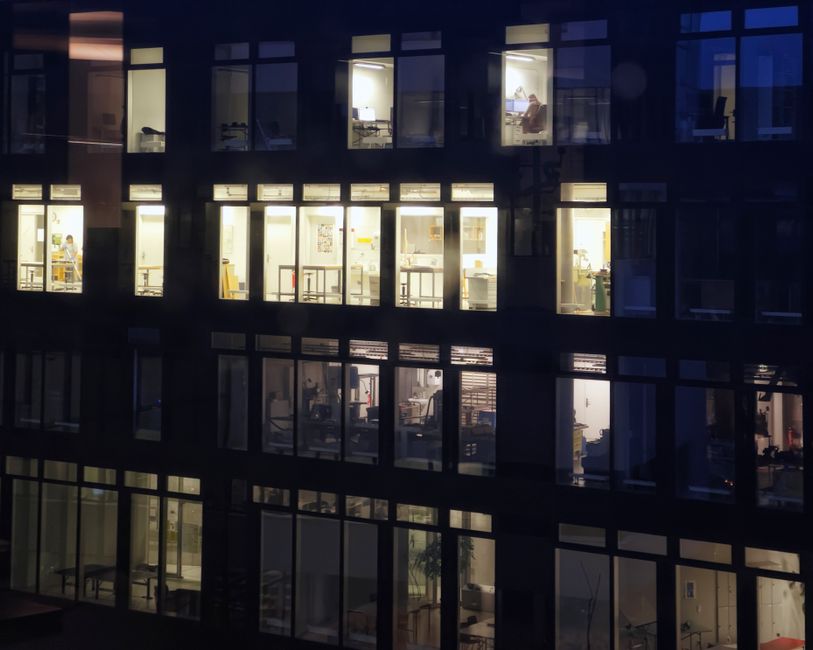
Renzo Collective signed a 15-year lease on a 42,000 sq ft Victorian warehouse on Scrutton Street, EC2, in January 2026 — the kind of long-term commitment most operators were still too nervous to make. By June, the building was 94 percent occupied. The waiting list for its smallest desks runs to 340 names.
The timing matters because London's wider office market is still sorting itself out. The City of London Corporation reported in its Q1 2026 review that overall vacancy in the Square Mile sat at 9.3 percent, a marginal improvement on the 10.1 percent recorded at the same point last year, but still above the pre-pandemic average of around 5 percent. Demand is recovering, but it is brutally selective: tenants want quality, flexibility, and a reason to leave the kitchen table. Buildings that offer none of those things are watching rents fall and fit-out incentives climb.
Renzo Collective's founder, Marcus Adeyemi, spent a decade as a commercial surveyor at Savills before launching the firm in 2022 with a single floor above a coffee roaster on Redchurch Street. His proposition from the start was simple — strip out the long-lease model entirely and offer rolling monthly terms alongside a set of services that make the rent feel like the smallest part of the bill. The Scrutton Street building now houses a recording studio, a cold-plunge suite, a dedicated GP clinic that operates two mornings a week, and a ground-floor members' bar that stays open until midnight under a Hackney Council premises licence. Average all-in cost per desk runs to £850 a month, against a market average for similar Shoreditch flex space of roughly £620, according to data from Cushman & Wakefield's London flex tracker published in May.
A Premium Product in a Nervous Market
That £230 per-desk premium is the whole argument. Adeyemi's pitch to prospective tenants is that the gap disappears once you account for the corporate gym membership, the private GP, and the kind of client-entertaining space that would otherwise require hiring a venue on Old Street or booking a private dining room in the Barbican. Three of Renzo's current tenants are legal firms that relocated from conventional offices in the Aldgate area. Two others are financial technology companies that gave up leases in Canary Wharf's One Canada Square.
The business model sits inside a broader shift. JLL's June 2026 London office report found that flex space now accounts for 17 percent of all office transactions in Central London by square footage, up from 11 percent in 2023. Grade A stock — new or comprehensively refurbished — commands a growing rent premium over older buildings; the gap between top-tier and secondary space in EC1 and EC2 widened to £28 per sq ft in the first quarter, the largest differential on record. Landlords sitting on unrenovated 1980s and 1990s stock are under real pressure.
Renzo is already in due diligence on two further sites: a former printworks near Farringdon Station and a ground-plus-three building on Paul Street, N1, three minutes' walk from Old Street Roundabout. Both are targeting occupancy by the first quarter of 2027. Adeyemi has also brought in BGF — the Business Growth Fund — as a minority equity investor, closing a £12 million round in April.
What the Rest of the Market Needs to Watch
The cautionary note for anyone trying to replicate the model is capital intensity. Renzo's Scrutton Street fit-out cost £6.2 million, roughly £148 per sq ft, more than double what a conventional leasehold operator would spend. The premium amenities that drive occupancy also drive upfront costs to levels that demand either strong equity backing or patient institutional debt. Not every entrepreneurial operator in the flex sector has access to either.
For tenants, the practical read is straightforward. If your firm is evaluating London office space this autumn, the buildings filling fastest are those offering short contractual commitments combined with genuine amenity — not table football and bean bags, but services that replace line items on a company expense account. The buildings sitting empty are the ones that have not made that calculation yet.