finance
City Jobs and Pension Pots Feel the Squeeze as FTSE 100 Slips Against a Surging Global Tide
London's benchmark index edged lower on Monday even as Wall Street, Tokyo and commodity markets pushed sharply higher, raising pointed questions for the capital's finance workers, exporters and anyone with a workplace pension.
How we reported this
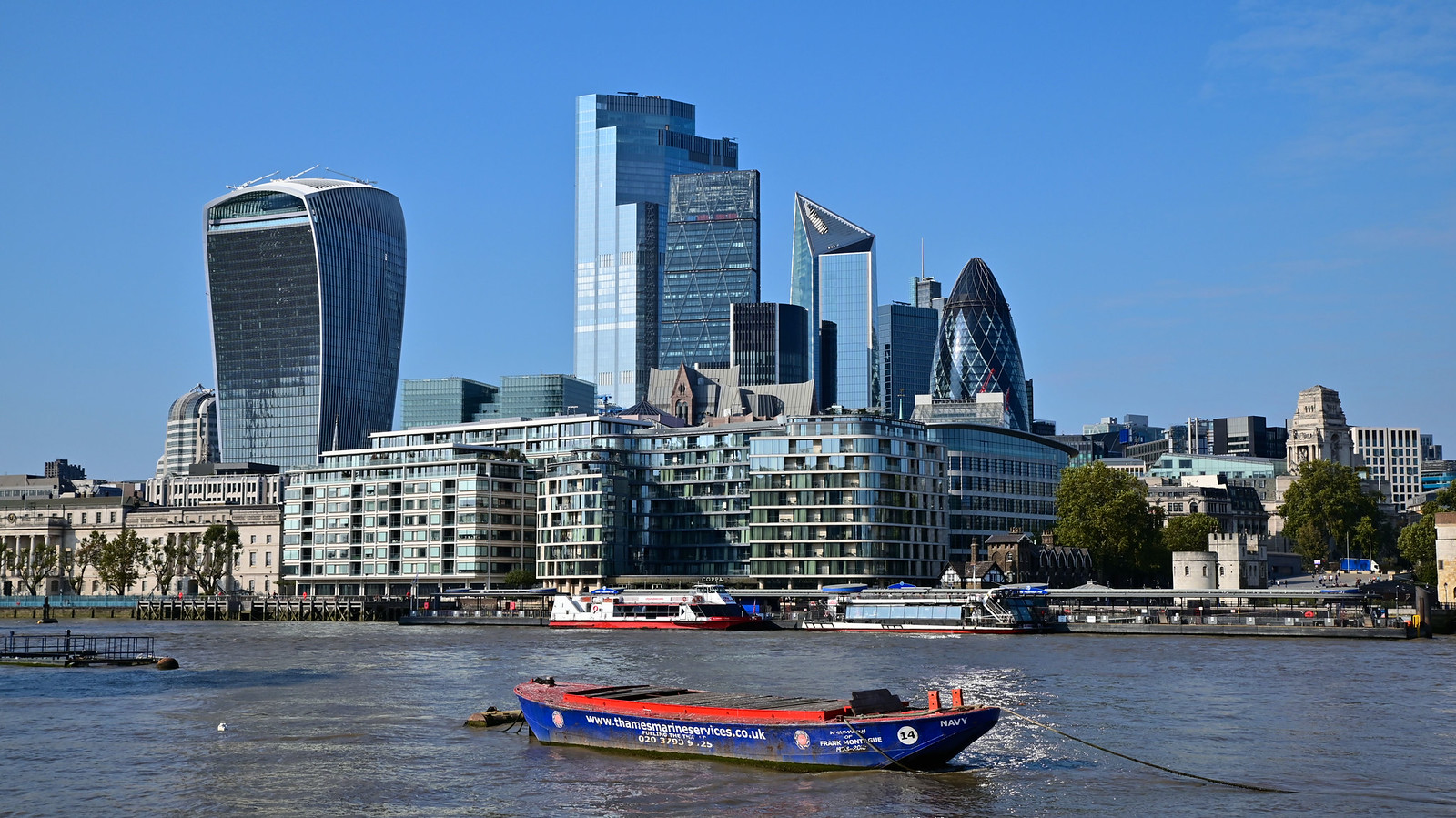
London's financial district found itself swimming against the current on Monday. While equity markets from New York to Tokyo surged and commodity prices climbed broadly, the FTSE 100 slipped 0.14% to 10,585.91, a modest retreat that nonetheless stands out against the day's otherwise buoyant global backdrop. For the hundreds of thousands of people whose livelihoods are tied to the City's trading floors, insurance houses, asset managers and the professional services firms that orbit them, the divergence is worth examining closely.
The contrast with Wall Street was particularly sharp. The S&P 500 gained 0.67% to 7,507.91, the Nasdaq climbed 1.19% to 25,825.17, and the Dow Jones added 0.16% to 52,230.41. Across Asia, the mood was even more ebullient: the Nikkei 225 surged 3.26% to 66,232.19 and the Hang Seng rose 2.32% to 25,132.29. European peers fared better than London too, with the DAX advancing 0.73% to 25,011.35 and the CAC 40 gaining 0.28% to 8,363.14. The FTSE 100's underperformance, on a day when risk appetite was clearly alive elsewhere, points to pressures that are specific to the composition of London's listed companies and the domestic economic conditions surrounding them.
Commodities surge, but the benefit is uneven for London-listed stocks
One of the more striking features of Monday's session was the breadth and scale of commodity gains. Brent crude rose 2.36% to 91.33 US dollars a barrel, while WTI crude added 1.68% to 84.63 US dollars. Gold climbed 1.94% to 4,088.30 US dollars an ounce, silver jumped 4.08% to 59.12 US dollars, platinum gained 3.02% to 1,640.30 US dollars, and copper advanced 3.65% to 6.529 US dollars a pound. Natural gas edged up 1.01% to 2.889 US dollars. In theory, a FTSE 100 index with meaningful exposure to energy majors and mining groups ought to benefit from this kind of commodity rally. That the index still closed lower suggests other forces, whether sterling movements, profit-taking, or sector-specific concerns, were weighing on sentiment in London specifically. The net effect on British businesses is also uneven: energy-intensive manufacturers and logistics companies face higher input costs at the same time that commodity producers on the index see their revenues bolstered.
For London workers and savers, the commodity picture feeds into everyday costs in ways that are easy to overlook on a busy trading day. Higher oil prices tend to filter through to fuel costs and business energy bills within weeks, pressuring margins for the small and medium-sized firms that supply the capital's enormous services economy. Those firms employ far more Londoners than the FTSE 100 companies themselves, meaning the commodity surge carries a sting for wage negotiations and household budgets that will not show up immediately in index levels.
The digital asset markets offered a separate thread of interest for City professionals who increasingly work alongside crypto desks and digital finance teams. Bitcoin rose 1.74% to 66,366.62 US dollars, Ethereum gained 1.02% to 1,923.22 US dollars, and XRP led the majors with a 4.32% advance to 1.1602 US dollars. BNB, Solana and Dogecoin also moved higher, though more modestly. London has positioned itself as a European hub for regulated digital asset activity, and sessions in which crypto moves broadly in line with risk-on equities tend to reinforce the argument that the asset class is maturing into a recognisable component of institutional portfolios managed from the Square Mile.
For Londoners reviewing pension statements or ISA portfolios, Monday's session is a reminder that domestic index performance is only one part of a globally diversified picture. A pension fund with international equity exposure would have captured gains from Tokyo's sharp rally and Wall Street's advance even on a day when the home benchmark dipped. The direction of sterling against major currencies also shapes the sterling value of those overseas returns, though the precise rate on any given day will vary by the time of dealing. The practical lesson is familiar but worth restating: the FTSE 100 is a useful headline number, but it is neither a complete measure of a London saver's exposure nor a reliable proxy for the health of the broader British economy. All figures cited here are drawn from the Yahoo Finance market snapshot captured at 2026-07-21T19:30:04 UTC. This article is general information only and does not constitute personal financial or investment advice. Readers should consider their own circumstances and consult a licensed professional before making any financial decisions.