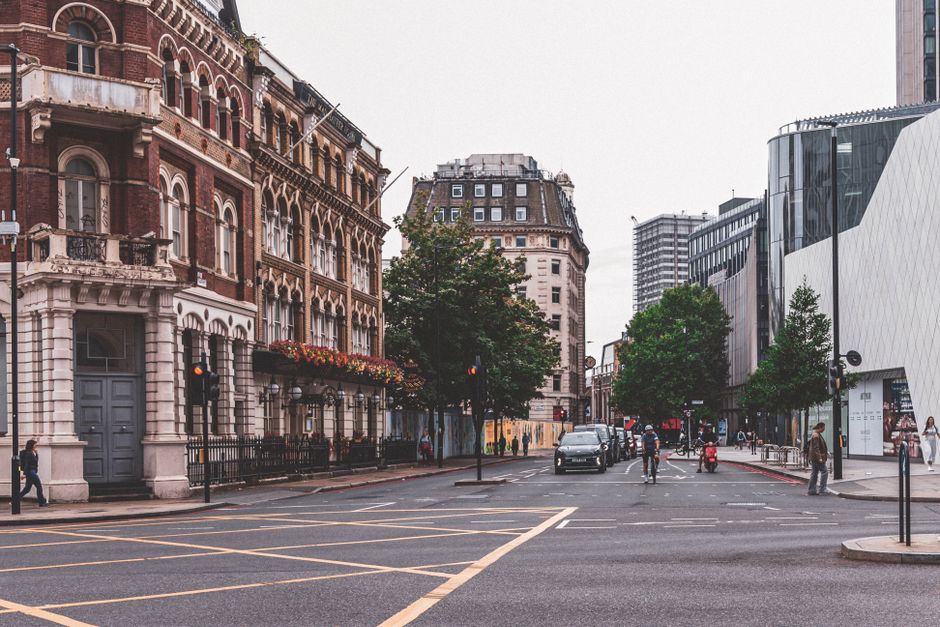
City Hall confirmed this week that London's Ultra Low Emission Zone has now generated more than £280 million in charges since its central zone expansion in August 2023, with that revenue ring-fenced for cleaner bus routes and cycling infrastructure across all 33 boroughs. The announcement lands at a moment when Europe is counting excess deaths from a punishing heatwave — France recorded more than 2,000 in a single peak period — and Londoners are being forced to think seriously about what extreme heat means for a city of 9 million people whose Victorian housing stock was built for damp, not drought.
The timing is not accidental. Mayor Sadiq Khan's office has been under sustained pressure from both environmental groups and backbench Labour councillors to show that green policy translates into tangible gains for ordinary residents, not just glossy infrastructure projects on the Embankment. The Starmer government's planning reform agenda, meanwhile, is pushing councils to embed climate resilience into every new housing development — a requirement that is already reshaping planning applications from Barking Riverside to Old Oak Common.
Where the Money Is Landing
The most visible change is happening in east London. Hackney Council's Warmer Homes programme, which began its current phase in January 2026, has so far upgraded insulation in 1,400 properties across Clapton, Stoke Newington and Dalston. Households in those streets are reporting average annual energy bill savings of around £340 — modest, but real, against a backdrop where the Ofgem price cap still sits above pre-2021 levels. The council has committed a further £6.2 million to extend the scheme through December 2027, with priority given to privately rented homes where tenants have historically had no leverage over landlords to fund improvements.
Across the river, Lewisham's Green New Deal partnership with the Greater London Authority is converting the former Deptford railway arches on Reginald Road into a community energy hub, expected to open in autumn 2026. The hub will provide subsidised solar panel installation advice, free home energy audits, and a repair café aimed at keeping household appliances out of landfill. It is one of 14 such hubs Khan's office is funding across the outer boroughs, with a combined budget of £18 million drawn from the UK Shared Prosperity Fund.
The Cooling Problem Nobody Wants to Acknowledge
Heat is now the issue that cuts through in a way air quality arguments never quite managed. Transport for London recorded 47 separate service suspensions on the Underground during last month's heat event, when surface temperatures on the District line at Parsons Green exceeded 38 degrees Celsius. Engineers at TfL have accelerated a retrofit programme to install mechanical cooling on the sub-surface lines — the Circle, District, Hammersmith & City and Metropolitan — but the full rollout will not be complete until 2029 at the earliest, at a projected cost of £1.1 billion.
In the meantime, the London Climate Resilience Review, published in May 2026, identified 340 lower-income neighbourhoods — concentrated in Tower Hamlets, Newham and Croydon — where tree canopy cover falls below 10 percent of street area. Those streets heat up faster and stay hotter overnight. The review recommended 90,000 new street trees be planted by 2030. So far, roughly 12,000 have been funded.
For residents watching all this unfold, the practical advice is specific. Households in any of the 14 hub boroughs can book a free home energy audit through the GLA website from July 7. Anyone in a privately rented property with an Energy Performance Certificate rating of D or below can now apply directly to their local council for a landlord improvement notice under powers extended in the Renters' Rights Act. And for those facing another summer on a sweltering Tube platform, TfL's Journey Planner now flags the seven coolest Underground interchanges in real time — King's Cross St Pancras, Stratford and Clapham Junction among them — during heat alerts. Small consolations, but concrete ones.