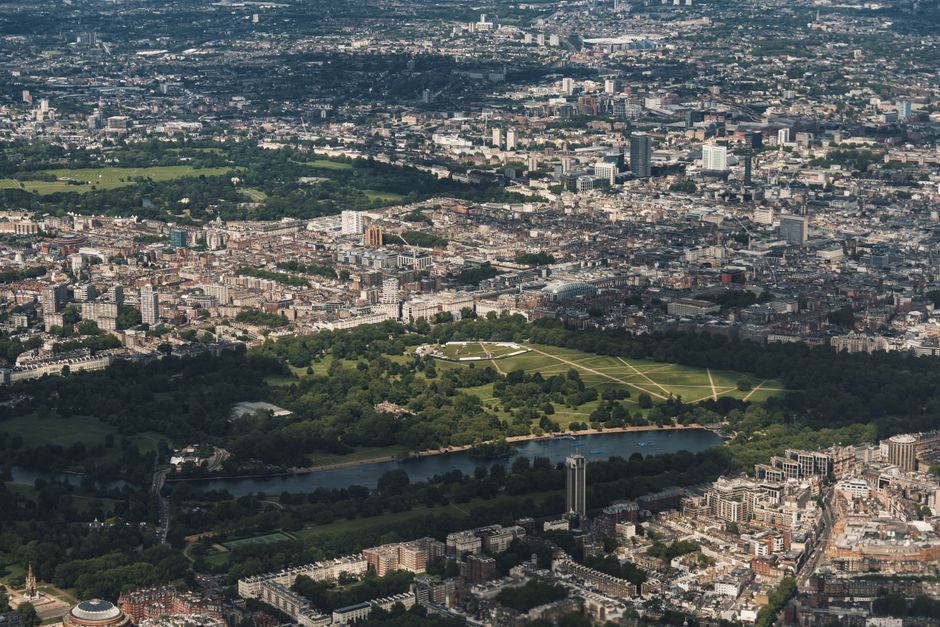
More than 340,000 duplicate property images are currently circulating across London's major housing portals and council planning databases, according to an audit completed by the Greater London Authority's digital infrastructure team in June 2026. The figure, which covers listings on platforms including Rightmove and Zoopla as well as the GLA's own open data repositories, represents roughly one in every eight property photographs published for addresses within the M25. The cost of manually reviewing and replacing those images has been estimated at £2.3 million across the 33 London boroughs combined.
The timing matters. Sadiq Khan's planning reform push — designed to accelerate housing delivery to 52,000 new homes per year across the capital — depends heavily on clean, reliable digital records. Duplicate or mislabelled images in planning applications have already contributed to delays in at least three major development zones, including the Silvertown Quays regeneration in Newham and the Meridian Water scheme in Enfield. When planning officers cannot quickly verify which photograph corresponds to which plot or elevation, decisions slow. And slow decisions cost money.
Where the Problem Concentrates
Tower Hamlets and Southwark account for a disproportionate share of the duplicate image backlog. The London Borough of Tower Hamlets planning portal alone flagged 18,400 duplicate image instances between January and May 2026, many of them generated during the rapid digitisation of legacy paper files between 2021 and 2023. Southwark's equivalent figure stood at 14,700. Both boroughs are running active regeneration programmes — Southwark along the Old Kent Road corridor, Tower Hamlets around Whitechapel and Bethnal Green — meaning the volume of new digital submissions is compounding an already cluttered archive.
The GLA's digital team has been trialling automated deduplication software developed in partnership with the Alan Turing Institute on Gray's Inn Road since March 2026. Early results from a pilot covering 12,000 images in the Lambeth planning database showed the software correctly identifying duplicate or near-duplicate images with an accuracy rate of 91 percent, reducing manual review time by an estimated 64 percent per case. The pilot's findings were shared with the Ministry of Housing, Communities and Local Government in May.
Private sector portals are not immune. Rightmove reported internally — in a February 2026 technical note that was subsequently cited in a House of Commons housing select committee session — that around 6 percent of London listings contained at least one image that was an exact or near-exact copy of another image within the same listing. On a market with roughly 85,000 active London listings at any point in the year, that translates to approximately 5,100 listings carrying redundant visual data. Estate agents in areas like Clapham and Islington, where stock turns quickly, have told industry publication Estate Agent Today that duplicate images most commonly arise from rushed uploads during high-demand periods.
What Authorities Plan to Do About It
The GLA has set a target of reducing its internal duplicate image count by 70 percent before the end of the 2026-27 financial year. That will require deploying the Turing Institute software across all 33 borough planning portals — a rollout budgeted at £870,000, funded through the government's Local Digital Fund. The first six boroughs, including Newham and Camden, are scheduled to go live with the tool by October 2026.
For property professionals and developers submitting planning applications, the practical implication is straightforward: applications lodged after September 2026 at participating boroughs will be automatically screened for duplicate images at the point of upload, with a warning flag issued before submission is finalised. Officers at Newham Council have already begun briefing architectural practices in Stratford and Canary Wharf about the new requirements.
The broader lesson from the data is simple. Duplicate images are not a cosmetic nuisance. In a city where planning delays routinely add months and six-figure sums to development costs, a cluttered image database is a structural problem with a measurable price tag. The software exists. The budget has been allocated. The question now is whether the rollout calendar holds.