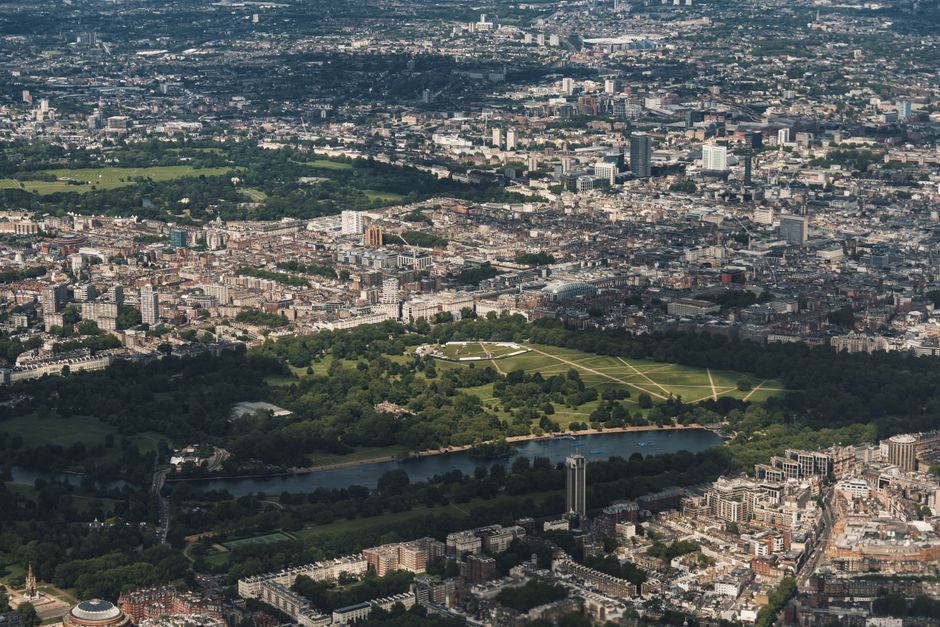
London's borough planning departments are sitting on a sprawling, duplicated digital archive that has quietly ballooned over more than a decade, with identical site photographs, heritage surveys and flood-risk assessments filed redundantly across multiple council databases. The problem is not new. But pressure from the Starmer government's planning reform agenda — which includes a statutory requirement for all local planning authorities in England to migrate to a standardised digital submissions portal by March 2027 — has forced the issue back into the open.
The duplication problem matters now because of timing. The Planning and Infrastructure Bill, currently working through Parliament, ties future planning performance funding to digital compliance benchmarks. Councils that cannot demonstrate clean, non-redundant document stores risk losing a portion of their planning capacity grant. For London boroughs already stretched by the NHS waiting-list crisis and housing pressures, that is not an abstract threat.
How the Archive Got This Cluttered
The roots of the problem go back to 2012, when the then-Department for Communities and Local Government encouraged councils to digitise their paper planning records independently, with minimal central coordination. Each of the 32 London boroughs plus the City of London Corporation built or bought its own document management system. Southwark Council went with one vendor; Hackney chose another; Tower Hamlets a third. When applicants submitted the same environmental impact study to two neighbouring boroughs — common on boundary-straddling sites along the Lea Valley or around the Old Kent Road regeneration corridor — both authorities stored their own copy, tagged with different metadata and in different file formats.
The Greater London Authority has known about the problem for years. A 2019 review by the GLA's Planning team identified more than 40,000 documents duplicated across at least two borough systems. That figure has grown substantially since, as large-scale development programmes — including the Silvertown Tunnel planning process, the Meridian Water scheme in Enfield, and multiple iterations of the Euston area masterplan — generated thousands of supporting documents circulated to multiple authorities simultaneously.
Camden Council's planning portal alone contains more than 180,000 active document records related to applications submitted since 2015, according to figures published in its 2024-25 annual infrastructure report. Officers have acknowledged in committee papers that a meaningful share of those records are duplicates of submissions held by neighbouring boroughs or by Transport for London.
The Cost, and What Comes Next
Storage costs are one thing — cloud hosting for a mid-sized London borough's planning archive runs to tens of thousands of pounds a year. But the deeper cost is in officer time. When a planning officer in Islington and a colleague in Haringey are independently reviewing the same heritage impact assessment for a development near Hornsey, duplication becomes a staffing problem as much as a data problem. The Local Government Association estimated in a 2024 policy paper that administrative inefficiencies in English planning departments — including duplicate document handling — cost councils in aggregate more than £120 million a year in wasted officer hours, though it did not break that figure down by region.
The push toward a single national planning data standard, championed by the Planning Data programme run out of the Department for Housing, Communities and Local Government, is designed to fix this at source. Under the proposed system, a document submitted to one authority would be assigned a unique identifier; any subsequent submission of the same file to a second authority would be flagged automatically rather than stored again. Pilot work on the standard has been running at Lambeth Council and Newham Council since late 2024.
For applicants — particularly small developers and architects working on projects near borough boundaries in places like Bermondsey, Dalston or the Brent Cross town centre — the practical implication is straightforward. From early 2027, a single digital submission to the national portal should replace the current practice of emailing identical PDF bundles to multiple authorities. Whether the underlying archive cleanup happens before or after that deadline is a separate, messier question. Officers at several boroughs have said publicly, in committee, that legacy deduplication work will take years rather than months. The March 2027 compliance date covers new submissions. The backlog is another matter entirely.