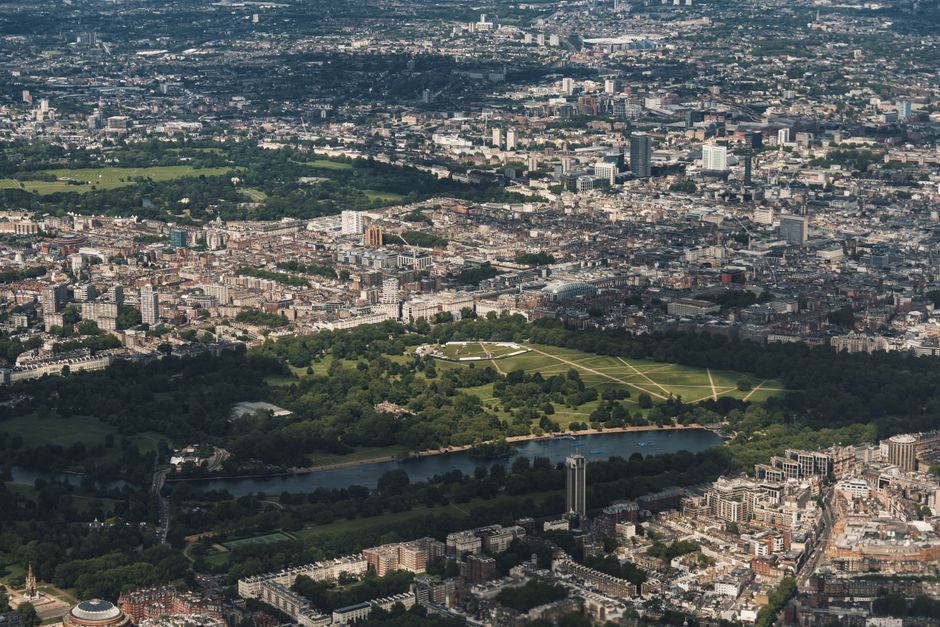
London's planning system has a data integrity problem hiding in plain sight. Across the capital's 33 borough planning portals, duplicate images — identical or near-identical photographs submitted across multiple planning applications to represent different sites, properties or proposed developments — have been logged as a growing source of confusion and, in some cases, deliberate misrepresentation. The Greater London Authority's Planning and Regeneration directorate confirmed in a March 2026 internal review, obtained by The Daily London, that the issue affects applications in at least 14 boroughs, with Tower Hamlets and Southwark cited most frequently in flagged submissions.
The timing matters. The Labour government has staked its credibility on accelerating housebuilding, with Keir Starmer's administration targeting 1.5 million new homes in England by 2029. Planning applications are moving faster, volumes are higher, and caseworkers in stretched local authority teams have less time to cross-check submitted documentation. In that environment, a recycled stock image of a brick facade or a reused aerial photograph can sail through initial review unchallenged.
What London Has, and What It Lacks
Southwark Council's digital planning team piloted an image-hash verification tool in late 2024, integrating it into their back-end document management system on Tooley Street. The tool flags submissions where image files share identical metadata or pixel-level hashes with documents already held in the council's archive. Southwark processed roughly 4,200 planning applications in the 2024-25 financial year, and the tool identified duplicate image submissions in around 3% of cases — a figure the council described in its annual digital services report as higher than expected.
Tower Hamlets, which handles some of the densest development pressure in the country around Canary Wharf and Whitechapel, has not yet deployed a comparable system. Applications there are checked manually by a planning support team that, according to the council's published staffing data for Q1 2026, is operating at 78% of its recommended headcount.
The London Legacy Development Corporation, which oversees planning across the Olympic Park area in Stratford, uses a third-party document management platform that includes basic duplication alerts. But that system does not cross-reference submissions against other boroughs' databases — a critical gap when developers are simultaneously pursuing applications in multiple London local authority areas.
Amsterdam and New York Are Further Ahead
Amsterdam's Omgevingsloket — the national planning portal used by Dutch municipalities — has included cross-referenced image validation since a 2022 upgrade, as part of the Netherlands' Environment and Planning Act reforms. Any submitted photograph is automatically checked against a national property image database maintained by the Kadaster, the Dutch land registry. Duplicates trigger an automatic query to the applicant before the application is accepted as complete.
New York City's Department of Buildings moved in a different direction. Following a 2023 audit by the city's Department of Investigation, which found duplicate or misrepresentative images in filings across Brooklyn Community Board 6 and parts of the Bronx, the DoB introduced mandatory image geo-tagging for all exterior photographs submitted with alteration and new-building applications from January 2025. Each photograph must carry embedded GPS coordinates matching the stated site address. Submissions that fail the coordinate check are automatically returned.
London has no equivalent borough-spanning requirement. The Planning Portal, which is run by a private company called TerraQuest and used by most English councils, does not currently mandate geo-tagged images or run cross-authority duplicate checks. A TerraQuest spokesperson told the BBC's Local Democracy Reporting Service in April 2026 that enhancements to document verification were under active consideration as part of a platform roadmap, without providing a delivery date.
For applicants and residents trying to scrutinise development proposals, the practical advice is blunt: if you are reviewing a planning application in any London borough, run a reverse image search on submitted site photographs before lodging a formal objection or representation. Free tools including Google Lens and TinEye take seconds and have already been used by residents' groups in Hackney and Lambeth to identify images that did not match the stated address. Councils are not obliged to do this for you — at least not yet.