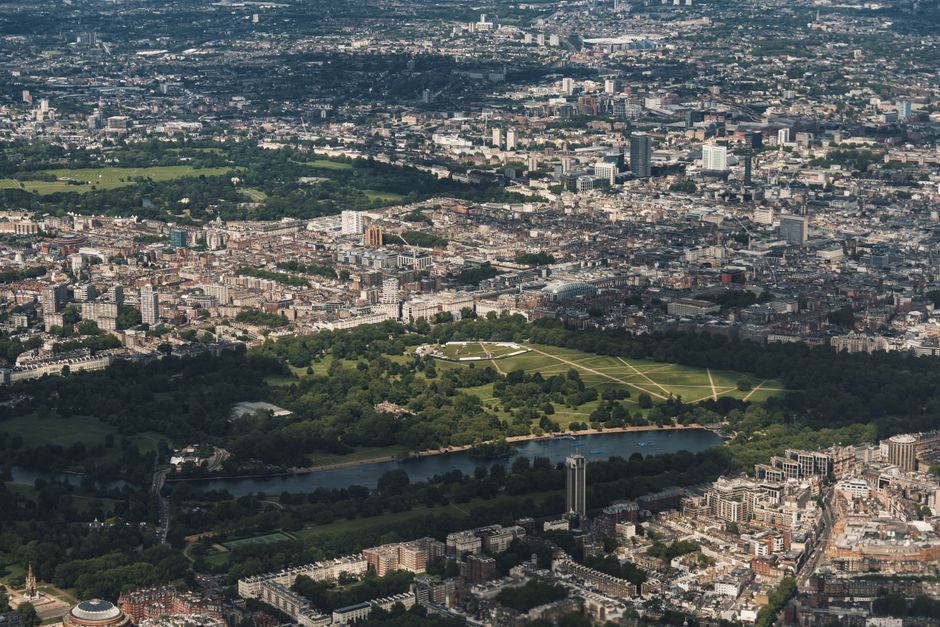
Planning officers at three London boroughs have raised formal concerns this year about the use of duplicate, recycled, or misrepresenting images in development applications — a practice that specialists say is quietly undermining confidence in the capital's already strained planning system. The issue has surfaced most sharply in Tower Hamlets, Southwark, and Lewisham, where case officers reviewing applications have flagged photographs and visualisations that appeared to have been lifted from earlier, unrelated projects.
The timing matters. The Labour government has put planning reform at the heart of its domestic agenda, pressing local authorities to approve more homes faster. That pressure creates a structural tension: the faster the pipeline moves, the less time officers have to scrutinise every document in an application pack. Image verification — checking that a submitted photograph actually shows the site in question, or that a CGI accurately represents a proposed scheme — is not a statutory requirement. Nobody has to do it. And increasingly, critics say, nobody does.
What the Experts Are Warning
Urban design consultants working across the City of London and inner south London say the problem is not new but has accelerated since 2023, when the volume of major applications to the Planning Inspectorate jumped sharply. Architects and planning lawyers interviewed for this piece declined to be named discussing client work, but the professional body the Royal Institute of British Architects has previously flagged concerns about image standards in application documentation in its published guidance on digital submissions, without attributing fault to specific practices or boroughs.
The Greater London Authority's Design and Review Panel, which advises on significant schemes, does scrutinise submitted visualisations for schemes above a certain threshold — generally those over 150 units or affecting the protected Thames skyline. But that panel sees only a fraction of the thousands of applications processed annually across London's 33 planning authorities. Most smaller schemes, including those in conservation areas from Islington to Richmond, pass through with images checked only by the receiving borough's own officers.
At University College London's Bartlett School of Planning, researchers examining digital documentation in planning applications have pointed to a systemic gap: there is no London-wide protocol requiring applicants to certify that submitted photographs are original, site-specific, and taken within a defined recent window. Several European cities, including Amsterdam and Vienna, have introduced such requirements for applications above a defined floorspace threshold.
Boroughs Respond — Unevenly
Tower Hamlets Council confirmed in a June 2026 planning committee report that it had introduced an internal checklist requiring case officers to cross-reference key application images against Google Street View records and Ordnance Survey data before validation. The borough, which processed over 4,200 planning applications in the 2024-25 financial year, said the measure was introduced after officers identified inconsistencies in documentation submitted for two commercial schemes near Whitechapel Road.
Southwark Council has not published an equivalent policy, though planning officers there have indicated informally that image verification is conducted on major applications. Lewisham has been quieter still. The London Borough of Lewisham declined to comment on specific cases when approached by The Daily London.
The Mayor's office noted that the GLA's London Plan, specifically Policy D3 on optimising site capacity, requires applicants to demonstrate existing site conditions accurately — but the policy does not specify how that demonstration must be evidenced or independently verified. Sadiq Khan's planning team said design quality guidance is kept under regular review, without offering a timetable for any update addressing image standards specifically.
For anyone submitting or reviewing planning applications in London right now, the practical reality is straightforward: the safeguard against misleading images is inconsistent, borough-by-borough, and largely dependent on individual officers having the time and tools to check. Those conditions do not always hold. The RIBA has signalled it will raise standardised image certification as a policy priority in its autumn 2026 submissions to the government's ongoing Planning and Infrastructure Bill consultation — a process that closes in October. That gives affected parties, from community groups in Peckham to developers working along the Silvertown Tunnel corridor, a narrow window to put image integrity on the formal legislative record before the bill progresses to committee stage.