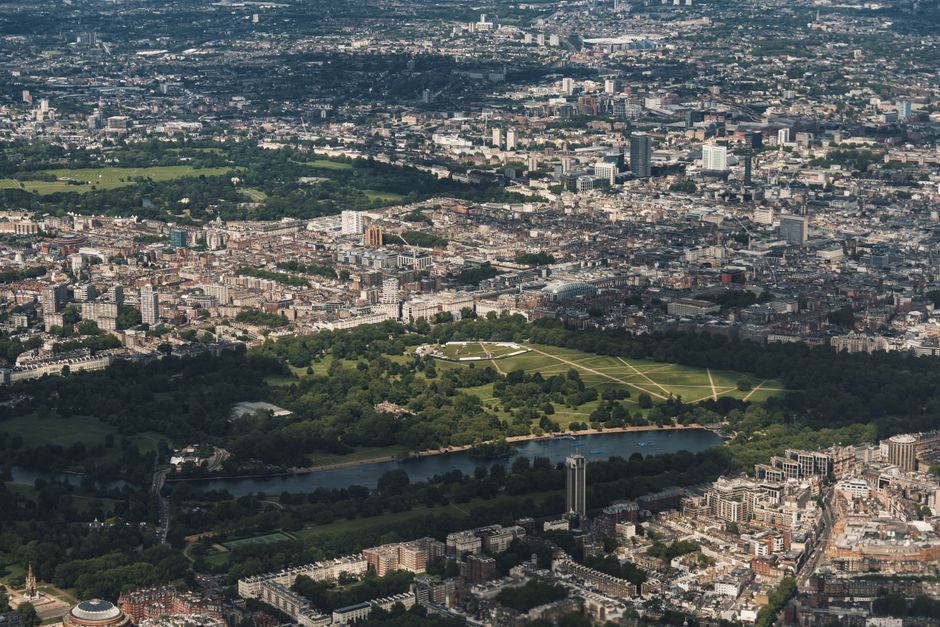
Planning offices across London are quietly wrestling with a problem that sounds mundane but is costing real money and real time: duplicate images submitted repeatedly across planning applications, clogging digital portals and forcing case officers to manually verify whether a photograph, architectural render or heritage survey image has been submitted before, somewhere else, by someone else. The Greater London Authority confirmed earlier this year that its Planning London Datahub — the centralised repository feeding into borough-level planning portals — had flagged the issue as a growing administrative burden.
The timing matters. Labour's planning reform agenda, central to Keir Starmer's domestic programme, depends on faster planning decisions to hit housebuilding targets. The government's National Planning Policy Framework update, which came into force in December 2024, explicitly requires local authorities to improve digital processing efficiency. If duplicate image submissions are adding even two or three days to the validation stage of each application, the cumulative delay across London's 33 boroughs runs into thousands of officer-hours annually.
What London Is Actually Doing
Two boroughs are leading practical responses. Southwark Council began piloting an automated image-hash checking tool integrated into its ePlanning portal in March 2026, designed to flag when an uploaded file is pixel-for-pixel identical to one already held in the system. The tool, built in partnership with the planning technology firm Idox, cross-references submissions against a database going back to 2019. Early internal figures cited in council committee papers suggest it has reduced duplicate validation queries by roughly 18 percent in the pilot's first quarter.
Tower Hamlets, where Whitechapel and Canary Wharf generate some of the borough's highest application volumes, is taking a different approach. Its planning team began training case officers in January 2026 to use reverse-image search tools as part of standard document validation — a lower-tech solution but one that requires no new procurement budget. The borough's planning committee agenda from June 2026 noted that the method had caught several instances of developers resubmitting architect renders originally prepared for sites in other London boroughs, sometimes years apart.
The contrast with how other major cities handle this is instructive. Amsterdam's Omgevingsloket — the national digital planning environment the Netherlands moved all municipalities onto in 2024 — includes a mandatory metadata check at upload that rejects files sharing identical EXIF data or file hashes without a caseworker override. New York City's Department of City Planning, working through its DOB NOW portal, uses AI-assisted document review that flags visual similarities across commercial submissions, a system the city began deploying in phases from late 2023. Tokyo's ward offices have taken a regulatory rather than technological route: since 2022, applicants must attach a signed declaration confirming images are original or correctly attributed, with penalties for false declarations.
The Cost and the Stakes
London does not yet have a single unified technical standard across its boroughs, which is precisely why the problem persists. Each of the capital's 33 local planning authorities procures and manages its own portal infrastructure. The Planning Advisory Service, a Local Government Association body that supports councils on planning improvement, estimated in a 2025 benchmarking report that English planning authorities collectively spend upwards of £40 million annually on administrative validation tasks that digital automation could reduce significantly — though that figure covers all document validation, not image duplication alone.
For developers and architects working on projects along the Thames Opportunity Area — stretching from Vauxhall through Nine Elms to Battersea — the practical irritant is real. Large mixed-use schemes regularly involve dozens of submitted documents, and a heritage photograph or CGI render rejected as a suspected duplicate can trigger a validation hold that pauses the entire application clock.
The GLA's Planning London Datahub team has indicated it intends to publish a technical standard for image metadata requirements by the end of 2026, which would give boroughs a common baseline. Whether that arrives on schedule, and whether boroughs have the budget to implement it, will determine whether London closes the gap on Amsterdam and Tokyo — or continues handling the problem borough by borough, one duplicate at a time.