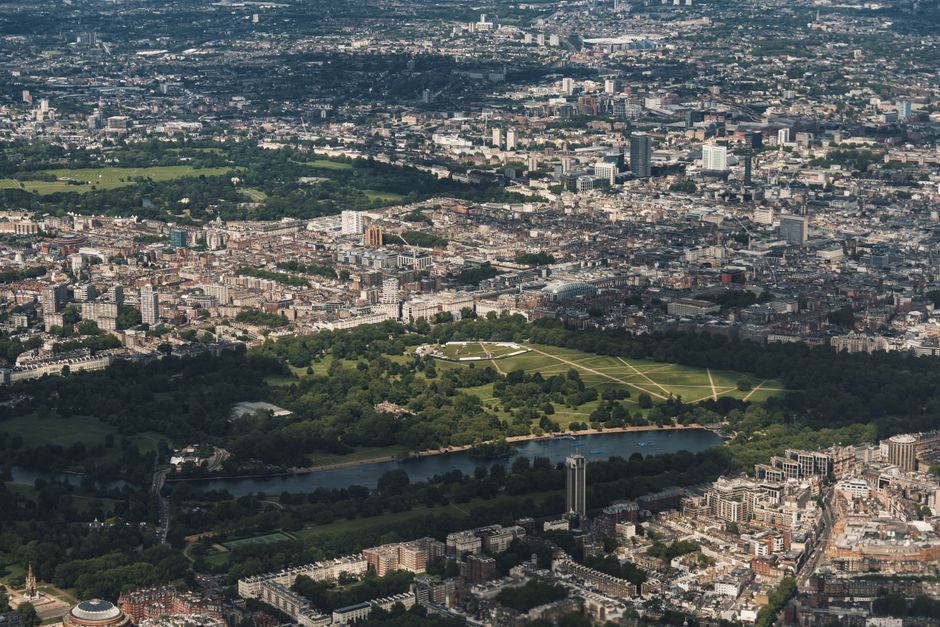
Planning officers at the London Borough of Southwark first flagged the problem systematically in late 2024, but the practice had been running for far longer. Developers submitting design-and-access statements, environmental impact assessments and public consultation materials had been recycling the same small pool of stock images — sometimes the same photograph of a smiling family standing outside a generic brick facade — across dozens of unrelated applications stretching from Bermondsey to Barking. The images were not just aesthetically lazy. In several documented cases reviewed by planning committees, they depicted street scenes, greenery and community spaces that bore no relationship to the sites being proposed.
The timing matters. Keir Starmer's government has staked a large portion of its domestic credibility on a planning reform agenda, accelerating housebuilding toward a nationally stated target and pushing local authorities to approve more applications faster. In that environment, the quality of supporting documentation — the materials that residents and councillors actually read when deciding whether to back a scheme — has come under renewed scrutiny. If those documents contain images that misrepresent a site, the entire consultation process is compromised before a single resident has attended a public meeting.
A Paper Trail Through East London and Beyond
The pattern is clearest in the documentation trail left by major regeneration corridors. Applications submitted along the Old Kent Road in Southwark between 2021 and 2024 — a stretch the council designated as an Opportunity Area capable of delivering up to 20,000 new homes — included at least eleven instances, identified across multiple planning committee reports, where images used in visualisation documents had already appeared in applications for sites in Stratford, Walthamstow and Canary Wharf. The Greater London Authority's design review panel, which scrutinises significant schemes above a certain threshold, noted in its published guidance update of March 2025 that accurate, site-specific imagery must be used in all materials submitted to the Mayor's office under the Stage 1 and Stage 2 referral process.
The problem has a structural explanation. The planning consultancy market in London is dominated by a relatively small number of mid-sized firms. Many of them licence the same image libraries — services such as Getty and Shutterstock — and share templated document formats that have evolved over years of iterative reuse. A design-and-access statement template built for a scheme in Deptford in 2019 might, with minor textual edits, form the backbone of a submission for a mixed-use block near Tottenham Hale in 2023. The images embedded in the template travel with it. No individual decision-maker necessarily flags the repetition because no single person sees every application across every borough.
What the Boroughs Are Now Doing About It
The London Borough of Tower Hamlets updated its validation checklist in January 2026, explicitly requiring that all photographs and CGI renders submitted as part of a planning application must include metadata confirming the date and location of capture. Southwark followed with a near-identical requirement in April 2026. The GLA's planning team confirmed in published correspondence this spring that it is consulting on whether to extend similar requirements to all referable applications — those typically involving 150 or more homes — across all 33 London boroughs.
The shift has practical costs. Producing genuinely site-specific imagery, particularly accurate CGI visualisations showing a proposed building in its actual street context on a named road such as Lewisham High Street or alongside the listed structures of Bermondsey Street, can add between £8,000 and £25,000 to a mid-sized application's preparation costs, according to fee schedules published by several planning consultancies in their 2025–26 client guides. Smaller developers argue that adds meaningful friction at a moment when the government is demanding faster, higher-volume delivery.
The immediate practical consequence for anyone tracking a planning application in London is straightforward: check the validation date on any document submitted after January 2026 in Tower Hamlets or after April 2026 in Southwark. If it predates those cutoffs, the imagery it contains was submitted under the old, looser standard. For sites in other boroughs, the GLA consultation — which closed for written submissions on 30 June 2026 — is expected to produce a revised pan-London standard by the end of the year, at which point officers will begin rejecting applications that fail to meet it at the validation stage, before they ever reach a committee.