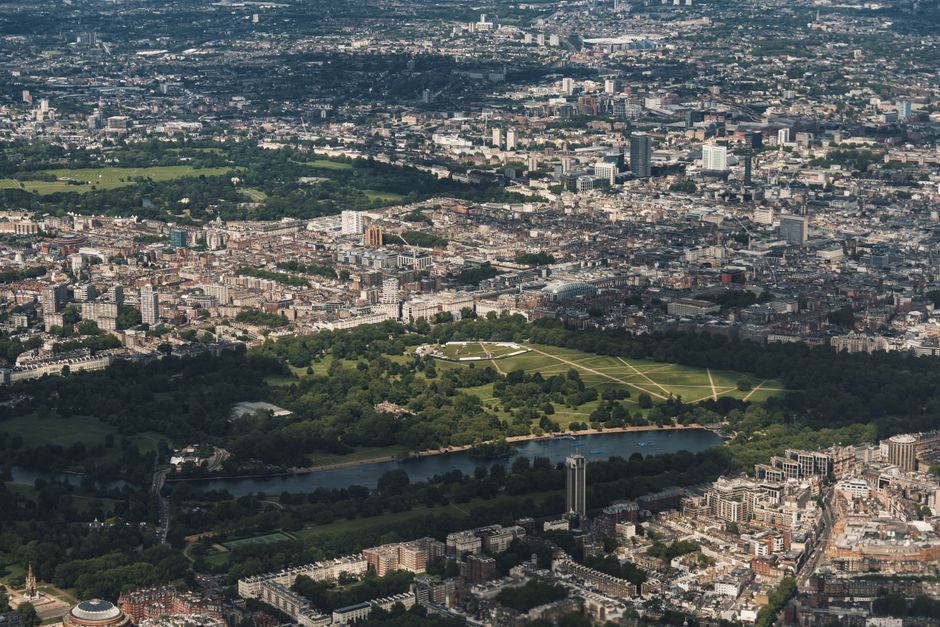
Planning officers across at least a dozen London boroughs are contending with a practice that has quietly grown alongside the capital's accelerated housing programme: developers submitting identical or near-identical computer-generated images in multiple planning applications, sometimes for sites hundreds of metres apart. The issue, known in planning and architecture circles as duplicate image replacement, has drawn criticism from council officers, heritage bodies and design advocates who argue it distorts public consultations and undermines scrutiny of what actually gets built.
The pressure on councils to process applications faster has intensified since the Labour government's Planning and Infrastructure Bill moved through Parliament this spring. Keir Starmer's administration has set a target of 1.5 million new homes nationally by 2029, and local authorities in London have been told to dramatically increase their approvals rates. Critics say that timetable, while necessary, has created conditions in which inadequately evidenced applications slip through unchallenged.
What the Experts and Officials Are Saying
Design bodies including the Design Council and the London Legacy Development Corporation — which oversees regeneration across Stratford, Hackney Wick and parts of Tower Hamlets — have flagged the issue in internal guidance updated earlier this year. The concern is straightforward: when a developer uses a single set of visualisations across several planning documents for different sites, local planning officers and members of the public cannot accurately judge how a proposed building will sit within its specific streetscape. A CGI rendered for a scheme in Elephant and Castle, for instance, may be redeployed in a submission for a site in Walthamstow with minimal alteration.
The Greater London Authority's design team has circulated informal guidance to borough planning departments asking for site-specific verified views in all major applications — those above ten storeys or 150 units. That threshold covers a significant slice of the development pipeline: as of the GLA's most recent monitoring data, London had more than 300 large residential schemes in active pre-application or application stage as of early 2026. Heritage bodies including Historic England, which maintains statutory responsibilities across listed structures from the Tower of London to the Grade II-listed terraces of Barnsbury in Islington, have separately raised concerns that recycled images fail to show how tall buildings interact with protected sightlines.
Architects working on mid-market residential schemes in Newham and Brent say the problem is partly economic. Producing accurate, site-calibrated visualisations can cost between £8,000 and £25,000 per scheme depending on complexity, according to figures cited by the Architects' Registration Board in guidance published in March 2026. For smaller developers working on sites of 20 to 50 units, that cost creates pressure to recycle existing renders. The ARB has said it expects registered architects to ensure that images submitted in their name accurately represent the specific site and context.
What Happens Next
Southwark Council's planning committee voted in June 2026 to require photomontage verification — a process in which proposed building images are overlaid on photographs taken from fixed, publicly registered viewpoints — for any scheme above eight storeys in the borough. The policy applies from September 1. Planning officers at Hackney Council confirmed they are reviewing similar requirements, with a decision expected before the end of the third quarter.
At City Hall, a formal consultation on updated London Plan guidance covering visualisation standards is expected to launch before the summer recess ends in September. The Mayor's office has not yet confirmed a publication date. Campaigners from the London Forum of Amenity and Civic Societies, which represents more than 100 local groups from Hampstead to Greenwich, have written to Sadiq Khan's planning team urging that any new standard include a mandatory checklist that planning officers must sign off before an application is validated — not merely before it is decided. That shift, they argue, would catch duplicate or generic imagery at the door rather than after months of consultation.
For residents trying to engage with planning applications on the council portals — whether in Tottenham, Peckham or along the Silvertown Tunnel corridor — the practical advice from the London Forum is blunt: always request the verified view schedule as a separate document and compare viewpoint coordinates across multiple applications from the same developer before submitting comments. It is a level of scrutiny most residents never knew was necessary.