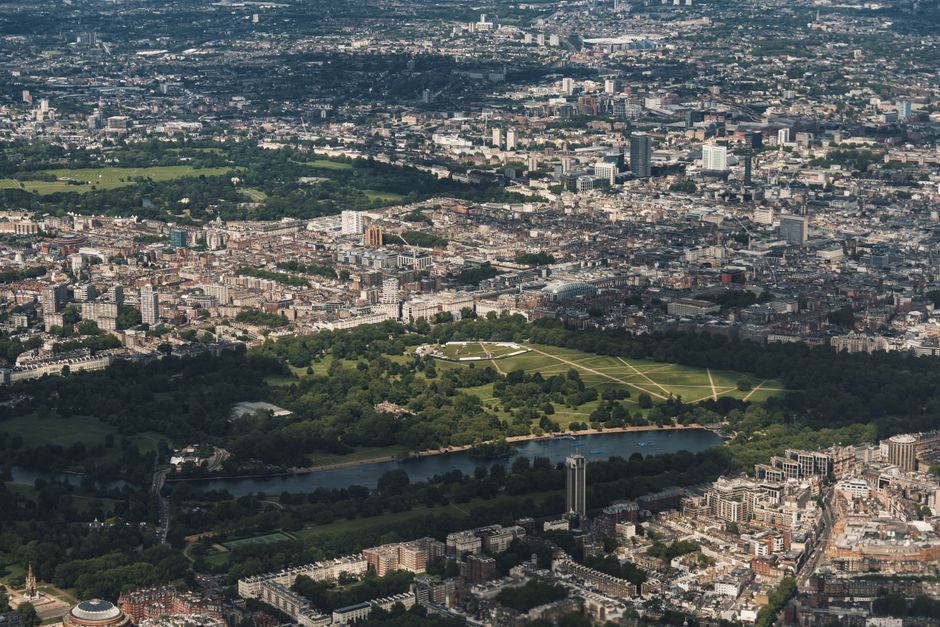
London's mapping and public-records teams are processing more than 40,000 flagged duplicate images from the city's street-level photography archive this year — a backlog that has accumulated across Transport for London's network documentation, the Greater London Authority's planning portal, and the Metropolitan Police's publicly accessible CCTV stills library. The scale of the problem, first formally acknowledged in a GLA digital governance review circulated in March 2026, has put the capital at the centre of a wider debate about how major cities handle what archivists call "image collision" in public datasets.
Why now? The push coincides with a surge in AI-assisted planning applications submitted under the government's Planning and Infrastructure Bill, which is moving through Parliament this summer. Duplicate or mislabelled street images fed into algorithmic planning tools can generate contradictory site assessments, a flaw that housing campaigners in Southwark and Tower Hamlets have cited as a source of delays on new residential schemes. With Labour's housing agenda riding on faster planning decisions, the administrative overhead of bad image data has acquired real political weight.
What London Is Actually Doing
Two programmes are driving the response. The first is TfL's Street Asset Imaging Programme, based out of the agency's Palestra House headquarters on Blackfriars Road. It uses automated hashing software to detect near-identical image pairs captured during repeat survey runs along routes such as the A10 through Hackney and the A3212 along the Embankment. Engineers then manually verify and archive one copy, deleting confirmed duplicates. The programme began its current phase in January 2026 and is contracted to run until December.
The second is the London Data Store's Image Deduplication Initiative, a quieter project managed jointly by the GLA and the Alan Turing Institute on Euston Road. That collaboration, announced in October 2025, applies machine-learning models trained on Ordnance Survey base maps to cross-reference images submitted by borough councils. Camden and Lambeth were the first two boroughs to complete their uploads, in April 2026.
Neither programme is fast enough for some critics. Digitisation specialists at University College London's Department of Information Studies have argued publicly — in a paper published in the journal Urban Informatics in May 2026 — that the manual verification step in the TfL workflow creates a bottleneck that could stretch the backlog into 2028 without additional resourcing.
How London Compares Globally
Amsterdam has been at this longer. The Dutch capital's Stadsarchief launched a systematic deduplication protocol for its street-imagery holdings in 2023, working with the Delft University of Technology, and publicly reported clearing 95 per cent of its identified duplicates within 14 months. The city's smaller geographic footprint — roughly 219 square kilometres against Greater London's 1,572 — made that timeline achievable.
Tokyo presents a more instructive comparison. The Tokyo Metropolitan Government began a city-wide image audit across its 23 special wards in late 2024, confronting a dataset several times the size of London's. As of spring 2026, the project was running roughly six months behind its original schedule, a delay attributed to the complexity of reconciling images held by different ward offices using incompatible file standards. London faces an almost identical interoperability problem between borough IT systems.
Singapore, which operates a centralised Smart Nation digital infrastructure under a single government agency, processed its street-image deduplication in under eight months during 2024 — a figure that city-data advocates frequently cite when arguing for more centralised governance of London's fragmented borough system.
For Londoners, the practical consequences are modest but real. Architects submitting planning applications for sites in areas such as Old Street and Nine Elms — both undergoing significant redevelopment — have reported receiving automated portal errors when image-referenced site assessments pull contradictory data. Some applicants have been asked to resubmit documentation, adding weeks to already lengthy timelines.
The GLA's digital team has indicated that a progress report on both programmes is expected before the end of September 2026. Borough councils in the next wave — including Lewisham and Croydon — are due to begin uploading their image inventories to the London Data Store in August. Whether the current resourcing holds is the question planners, developers and archivists are all watching.