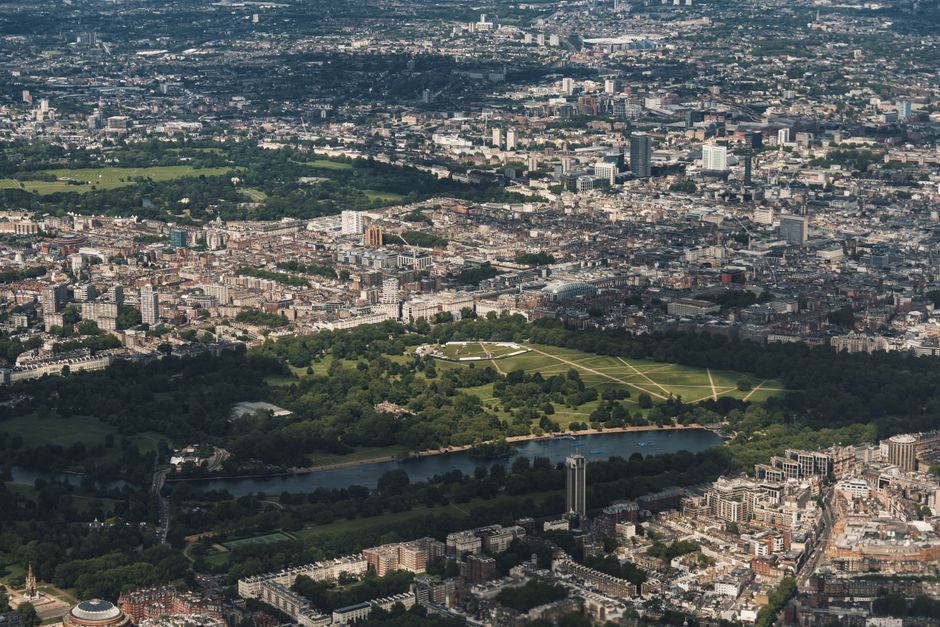
London's planning departments processed more than 97,000 applications in 2025, and a growing share of those submissions contained duplicate or near-identical images — the same render, the same street photograph, sometimes the same architectural diagram filed across multiple sites in different boroughs. The problem, which digital records managers at several councils have flagged internally, is straining verification workflows at a moment when the Starmer government is pushing councils to approve housing applications faster than at any point in the past two decades.
The issue matters now because the Planning and Infrastructure Bill, currently moving through Parliament, would dramatically expand digital submission requirements. Every major development application will eventually need to be filed electronically, with image evidence attached. If the quality and uniqueness of that imagery cannot be guaranteed, the integrity of entire planning records is at risk — not just for individual applications, but for the public databases that residents, journalists and rival developers rely on to understand what is being built, where, and why.
What London Is Actually Doing
The Greater London Authority's Digital Planning programme, based at City Hall on the South Bank, has been piloting automated image-hash detection since January 2026. The technology flags images that share more than 85 percent of their pixel data with another image already in the system, routing them to a human reviewer rather than passing them automatically into the public record. Tower Hamlets and Southwark were the first two boroughs to adopt the tool under a GLA-funded trial. Southwark alone logged 340 flagged submissions in the first quarter of 2026, according to figures the council published in its April planning committee papers.
The Geospatial Commission, a government body based in Whitehall, has separately been working on a national address and imagery baseline — a kind of canonical record of what a site looks like at a fixed point in time — that councils could use to cross-reference submitted photographs. That programme, called the Location Data Assets project, was announced in late 2024 but has not yet been rolled out beyond a pilot covering parts of the East Midlands.
How Other Cities Are Handling It
New York City's Department of Buildings moved first. It introduced mandatory EXIF metadata verification for all digitally submitted site photographs in March 2025, requiring that geolocation data embedded in image files match the address on the application to within 50 metres. The system rejected roughly 1,200 submissions in its first six months, according to figures published by the Department of Buildings on its open data portal. Amsterdam's Omgevingsloket — the Netherlands' unified environment and planning portal — uses a different approach: it cross-references submitted renders against a photogrammetric 3D city model updated quarterly, catching cases where an applicant has submitted imagery from a different street or an earlier phase of a neighbouring project.
Tokyo's approach is more manual but arguably more rigorous. Under rules administered by the Tokyo Metropolitan Government, licensed architects must sign a declaration confirming the originality of submitted visual material. Penalties for false declarations under Japan's Building Standards Act include professional deregistration. No equivalent professional liability mechanism exists in England and Wales for imagery specifically, as distinct from the broader duty not to mislead a planning authority.
London's GLA pilot is promising, but it covers fewer than a third of the capital's 33 planning authorities. Boroughs including Barnet, Ealing and Havering are still processing applications without any automated image-duplication checks. The gap matters: those three boroughs alone received a combined total of more than 11,000 applications in 2025, based on figures in their respective annual monitoring reports.
For anyone navigating the system right now — developers, architects, or members of the public checking what has been proposed near their home — the practical advice is straightforward. Use the London Development Database, maintained by the GLA and accessible at london.gov.uk, to cross-reference the images attached to applications in your area. If an image looks generic or inconsistent with the stated location, a formal objection citing the discrepancy can trigger a review. The Planning Inspectorate accepts such challenges at any stage before an application is determined. The GLA has indicated it expects the image-hash tool to be offered to all 33 boroughs by the end of 2026, though no binding rollout date has been confirmed.