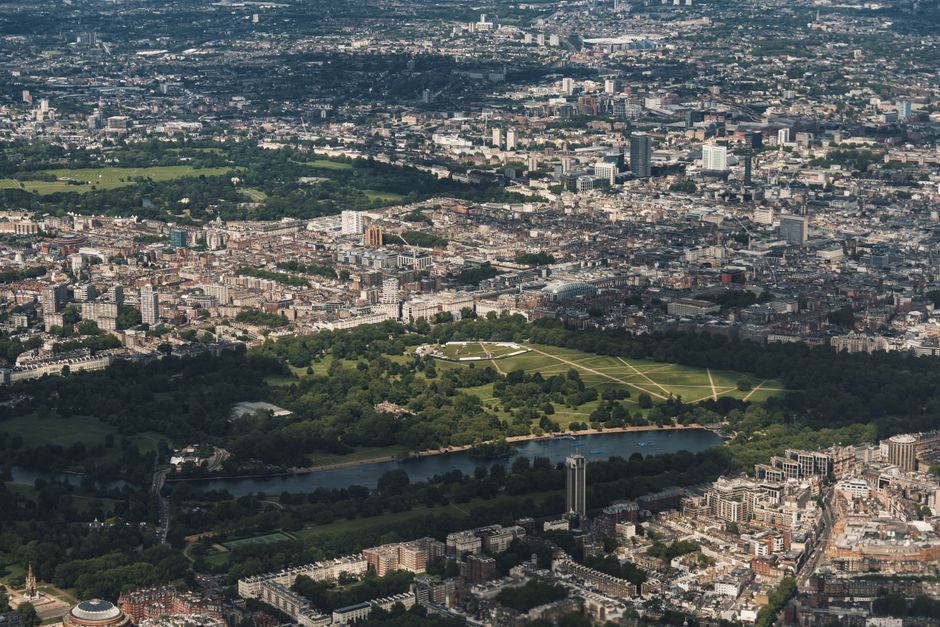
London's planning authorities moved this week to tighten scrutiny of duplicate and recycled images submitted alongside planning applications, following a pattern of concerns raised by councillors and urban design officers across several boroughs. The issue — long regarded as a technical irritant rather than a serious problem — has gained urgency as the Starmer government pushes an ambitious housing delivery target of 1.5 million new homes nationally by 2029, with a substantial share earmarked for Greater London.
At the heart of the matter is a straightforward but consequential practice: applicants submitting planning documents that reuse photographs, CGI renders, or street-level imagery from earlier, unrelated projects — sometimes from entirely different boroughs or even different cities. Planning officers say the practice distorts how proposed developments are assessed against their actual surroundings, undermining the integrity of design reviews that local communities depend on.
Where the Problem Is Being Felt
The issue surfaced most visibly this week at Tower Hamlets Council, where officers flagged at least three separate residential applications containing imagery that appeared to show generic streetscapes inconsistent with the sites in question — two in Whitechapel and one near Limehouse Cut. The council's planning committee, which meets next on 15 July, is expected to consider revised guidance requiring applicants to submit georeferenced photographs with embedded metadata confirming date and location.
Southwark Council has gone a step further. Its planning department quietly updated its pre-application advice notes earlier this month, explicitly warning that applications containing stock or duplicated site imagery may be returned without assessment. That policy applies to all major applications submitted to the council's offices on Tooley Street. Officers there have reportedly cross-referenced submitted photographs against earlier applications in the borough's publicly searchable planning portal, identifying mismatches in at least a handful of cases since January.
The Greater London Authority, which oversees strategic planning decisions affecting large-scale developments, has not yet issued formal guidance on the matter, though the GLA's design team has flagged it as an area for potential policy development in the context of Mayor Sadiq Khan's London Plan review, which is ongoing. The Plan's current iteration, adopted in March 2021, does not specifically address image authenticity requirements.
Why It Matters for Housing Delivery
The timing is not incidental. With Keir Starmer's government pressing councils to approve more housing faster — and with planning reform legislation moving through Parliament — there is real pressure on borough planning teams to process applications at higher volume. Critics argue that pressure creates the conditions in which documentation corners get cut, and duplicate imagery is one symptom of that.
A 2025 audit by the Planning Advisory Service, a body that supports local government, found that across English councils, documentation errors — including mismatched or reused images — contributed to measurable delays in around 12 percent of major planning applications that year. The audit did not single out London, but planning professionals in the capital say the figure is broadly consistent with their own experience.
The financial stakes are real. A standard pre-application advice fee for a major residential scheme in Tower Hamlets currently runs to £3,000 or more, and applicants who have applications returned face losing weeks of processing time on top of resubmission costs. For developers working against viability deadlines — particularly on sites along the Thames where remediation costs are already high — those delays compound quickly.
For residents and community groups, the concern is different but equally direct: if the images used to illustrate a proposed tower block on the Old Kent Road or a mixed-use scheme in Elephant and Castle do not actually reflect the street, neighbours cannot meaningfully assess the visual impact of what is being proposed.
Planning consultants advise that developers and their architects should, as a practical step, ensure all site photographs carry visible date stamps and are taken specifically for the application in question. Borough planning portals in London — including those run by Lewisham, Hackney, and Lambeth — allow members of the public to view submitted documents and raise concerns about their accuracy before a decision is made. Anyone with a specific concern about an active application can write to the relevant case officer directly, or attend the relevant planning committee meeting when it sits.