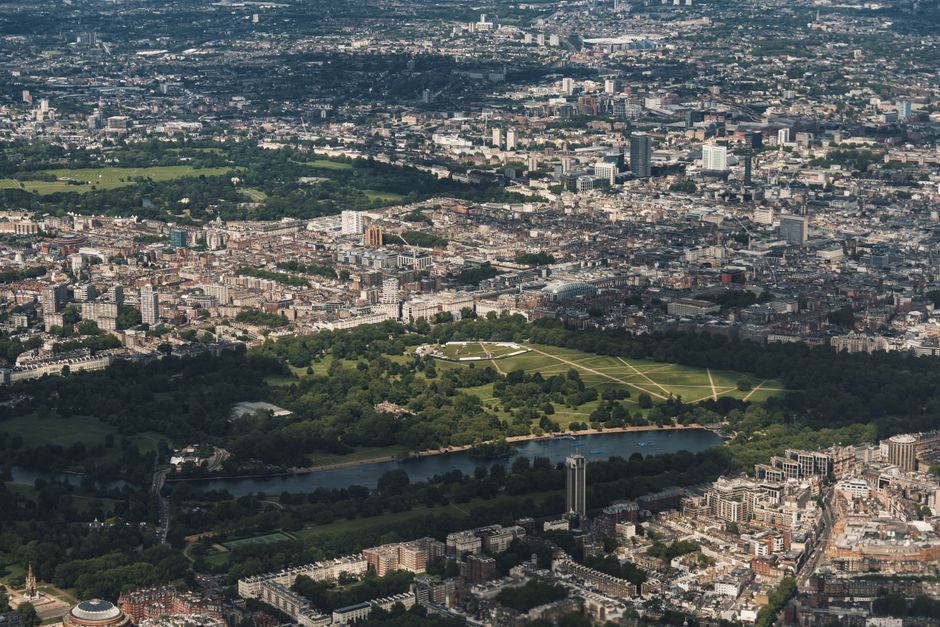
London is sitting on a fractured archive. Dozens of separate organisations — from the London Borough of Southwark to Historic England to the Greater London Authority itself — hold overlapping, often contradictory photographic and image records of the same buildings, streetscapes and development sites. The duplication is not merely a storage headache. It is actively distorting planning decisions, slowing heritage assessments and, in some cases, costing developers money when contradictory baseline images are used to challenge or approve demolition applications.
The problem has sharpened in 2026 because of two converging pressures. The Starmer government's Planning and Infrastructure Bill, currently passing through the Lords, will require local authorities to publish digital evidence bases for all major planning decisions by April 2027. At the same time, the GLA's Digital Twin programme — a project to build a real-time 3D model of Greater London — has begun ingesting image data from borough councils, only to find that the same streetscapes sometimes exist in three or four incompatible formats across different databases.
Where the Conflicts Are Sharpest
Two areas illustrate the stakes clearly. Along the Thames between Vauxhall Bridge and Battersea Power Station — one of the most intensively developed corridors in Europe over the past decade — image records held by Lambeth Council, the Nine Elms Vauxhall Partnership and Historic England do not always agree on the pre-development baseline. That matters enormously when a heritage objection is filed and solicitors for opposing parties reach for different photographic evidence. In Barking Riverside, where Homes England is overseeing the construction of up to 10,800 homes on a former power station site, the project's own archive contains duplicated drone survey images from 2022 and 2023 that were processed by two separate contractors using different metadata standards, making automated comparison tools unreliable.
The Local Government Association flagged the issue in its March 2026 submission to the Department for Housing, Communities and Local Government, noting that a lack of standardised image provenance protocols was creating legal exposure for planning authorities. The submission did not quantify costs nationally, but pointed to individual appeal cases where conflicting visual evidence had extended proceedings.
Historic England's National Record of the Historic Environment, based in Swindon but holding records for every London borough, currently indexes more than 450,000 images of Greater London alone. The figure, published on Historic England's own website, includes a significant proportion of near-duplicate entries — images taken days or weeks apart of the same façade, filed under different reference numbers by different contributing organisations.
The Decisions That Now Need to Be Made
Three specific choices will determine how this resolves. First, the GLA must decide by the end of this year whether the Digital Twin programme will act as the single authoritative repository or merely as an aggregator — the distinction has significant legal and financial consequences for borough councils who would otherwise retain liability for their own records. Second, the DLUHC must clarify, before the Planning and Infrastructure Bill receives Royal Assent, whether the mandatory digital evidence base requirement extends to image provenance metadata, or only to the images themselves. Third, Historic England and the London Legacy Development Corporation — which controls planning across much of east London, including the Queen Elizabeth Olympic Park area in Stratford — need to agree a deduplication protocol before major new heritage reviews begin in the Olympic Park's second phase of development, currently scheduled to start in late 2027.
For developers and community groups, the practical implication is straightforward: any organisation submitting planning evidence in London this year should audit their image records now, before the April 2027 deadline forces the issue. Law firms with planning practices along the South Bank have begun advising clients to commission fresh baseline surveys rather than rely on archival material whose provenance cannot be cleanly documented. The cost of a full photographic baseline survey for a mid-sized development site in zones one or two currently runs between £8,000 and £25,000 depending on scope — expensive, but considerably less than a contested appeal.
The GLA has said it expects to publish guidance on Digital Twin data standards before September 2026. That document, when it arrives, will be the clearest signal yet of which way the authoritative record question is going to fall.