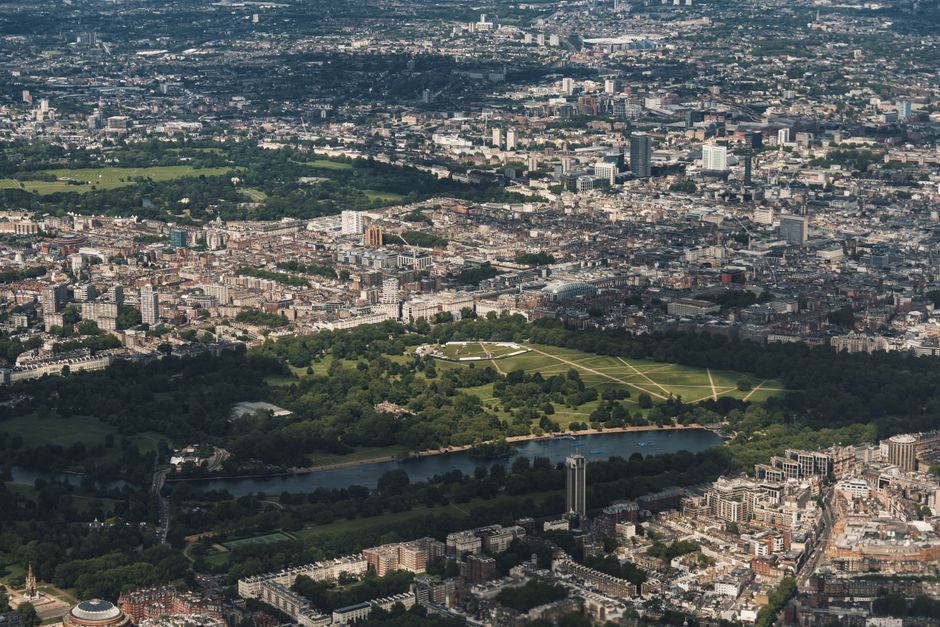
Planning offices across the London Borough of Southwark logged more than 340 complaints in the first quarter of 2026 about duplicated images appearing in public-facing development applications — the same photograph of a site submitted multiple times, sometimes across entirely different postcodes. The borough is not alone. From the Greater London Authority's Planning London Datahub to Transport for London's infrastructure asset registers, duplicate visual records have become a quiet but growing administrative headache, one that wastes staff time, distorts public consultations and, in some cases, has led to approvals being challenged in court.
The timing matters. The Labour government's planning reform agenda — central to Keir Starmer's domestic programme and embedded in the Planning and Infrastructure Bill currently before Parliament — depends heavily on digitising local authority records. If those records are polluted with duplicate or misattributed imagery from the outset, the entire premise of a faster, cleaner digital planning system starts to look shaky before it has been properly tested.
What London Is Actually Doing
The GLA began piloting an automated image-deduplication tool across its London Development Database in January 2026, working alongside Geovation — the Ordnance Survey and Land Registry-backed accelerator based in Clerkenwell. The tool uses perceptual hashing, a technique that generates a compact digital fingerprint for each image and flags near-identical matches, even when files have been resized or recoloured. Early figures circulated internally suggest it has flagged roughly 12 percent of image submissions in the pilot boroughs — Southwark, Tower Hamlets and Newham — as potential duplicates requiring human review.
Across the Thames, the Royal Borough of Greenwich has taken a more manual approach, assigning two full-time data quality officers since March to audit submissions to its local list requirements portal on Wellington Street. Officers there say the volume of repeat imagery spiked noticeably after several property developers began using AI image-generation tools to produce site photographs and visualisations at scale — a pattern that mirrors what planning authorities in other cities have publicly acknowledged.
How London Compares to New York, Berlin and Tokyo
New York City's Department of City Planning rolled out its ZoLa mapping platform upgrade in late 2024, incorporating automated media deduplication as a baseline feature. The city mandated that all Environmental Review documents submitted after September 2025 pass through a hash-check before acceptance — a hard gate that London has not yet implemented. Berlin's Senatsverwaltung für Stadtentwicklung went further still, publishing an open-source image audit library in February 2025 under its CityLab Berlin initiative, which smaller German municipalities have since adopted. Tokyo's approach differs structurally: Japan's national Building Standards Act centralises much of what London handles at borough level, meaning deduplication is managed through a single Ministry of Land, Infrastructure, Transport and Tourism portal rather than across 33 separate local authorities.
That fragmentation is London's core problem. With 33 boroughs each running partially independent planning portals — some still accepting PDF image bundles rather than structured data — a system-wide solution requires either central GLA coordination or a legislative push from Whitehall. The Planning and Infrastructure Bill, expected to reach its report stage in the Lords by October 2026, contains provisions for standardised digital submission formats, but critics have noted the draft text does not explicitly address image validation or deduplication protocols.
For developers and residents engaging with planning consultations right now, the practical advice is straightforward. When submitting or reviewing applications on the Planning Portal — the national gateway used by most London boroughs — check that every uploaded image carries a unique file name and has not been recycled from a previous application. Southwark's planning team confirmed in its Q1 2026 public report that applications containing flagged duplicate images are being placed in a secondary review queue, adding an average of 11 working days to processing times. That is not a trivial delay in a city where planning backlogs are already a political flashpoint. The GLA has said it plans to publish the results of its Geovation pilot by September, which should give a clearer picture of whether London's piecemeal approach can be stitched into something coherent — or whether the borough-by-borough patchwork will need a harder fix from above.