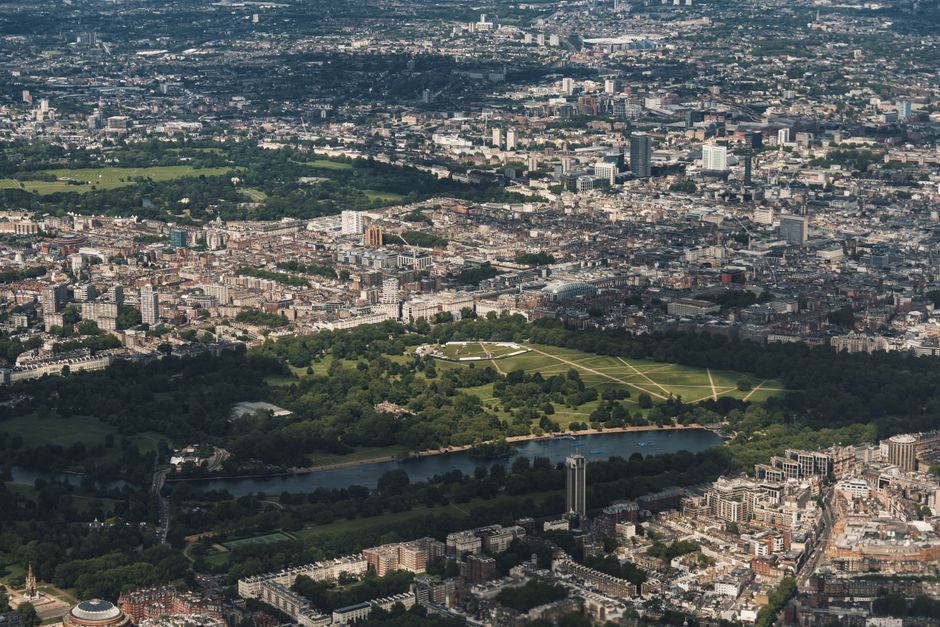
London's mapping authorities are sitting on a problem that costs councils real money. Duplicate imagery — photographs of buildings, streets and public spaces that appear multiple times across planning databases, heritage registers and the Greater London Authority's own digital asset systems — has ballooned in recent years, driven by the proliferation of drone surveys, 360-degree street capture programmes and AI-assisted urban planning tools. The GLA's digital infrastructure team acknowledged earlier this year that deduplication work across its spatial data holdings was a formal priority for the 2025-26 financial year.
The timing matters. Sadiq Khan's administration is pushing hard on planning reform, and the Starmer government's housebuilding agenda — which targets 1.5 million new homes by 2029 — depends on local authorities having clean, reliable digital records. When planners in Southwark or Tower Hamlets pull up site imagery to assess a development application, duplicate or mismatched photographs attached to the same address create delays, sometimes pushing applications past statutory determination deadlines. That has real costs for developers and for councils trying to meet government targets.
Where London Is Getting It Right — and Where It Isn't
The most advanced deduplication work in London is happening inside the London DataStore, the open data platform managed by the GLA and hosted at City Hall on Queensway. The DataStore's imagery catalogue, which covers everything from Ordnance Survey aerial captures to the Transport for London streetscape archive, began a systematic deduplication audit in October 2025. TfL's own asset management division has separately been running a programme to clean its Congestion Charge Zone camera database, where duplicate zone-entry images had reportedly been creating reconciliation errors in the billing system.
Contrast that with some outer London boroughs. Havering and Bromley, both managing large volumes of heritage asset photography uploaded during the 2022-24 digital conservation drive funded through Historic England's High Street Heritage Action Zones programme, have been slower to implement automated deduplication tools. The result is registers where the same shopfront on Romford Market or Bromley High Street may appear under three or four separate asset IDs, each with slightly different metadata.
New York City offers the sharpest comparison. The NYC Open Data portal, which holds millions of building inspection photographs under the Department of Buildings' eFiling system, completed a machine-learning-assisted deduplication pass in 2024 that removed approximately 2.3 million redundant image records, according to figures published by the city's Office of Technology and Innovation. Paris, through its Agence parisienne du climat and the city's Géoportail integration, has embedded deduplication checks at the point of image upload since 2023, meaning the problem barely accumulates. Tokyo's Urban Digital Twin project, launched under the Project PLATEAU initiative run by Japan's Ministry of Land, Infrastructure, Transport and Tourism, uses real-time hash-matching to reject duplicate captures before they enter the system.
The Practical Stakes for Planners and Residents
London does not yet have a city-wide standard. Each of the 33 boroughs manages its own planning portal, and the Planning Portal — the national system used for formal applications across England — does not currently run server-side deduplication on uploaded documents and images. A planning officer in Islington working an application on Upper Street must manually identify if an uploaded site photograph duplicates one already on the system. There is no automated flag.
The government's Planning and Infrastructure Bill, currently progressing through Parliament, includes provisions for digital planning standards that could eventually mandate deduplication protocols for all English local planning authorities. If those provisions survive committee stage and come into force, the GLA's existing DataStore framework could become a model for smaller authorities outside London — the capital's October 2025 audit putting it several steps ahead of most English councils, even if it lags behind New York and Paris on automation.
For now, residents and developers submitting planning applications should label images clearly with the address, date and camera position in the filename before uploading — a practice the Planning Portal itself recommends in its technical guidance documentation. Boroughs with active deduplication programmes, including Camden and Lambeth, are worth contacting directly if you believe your application file contains conflicting imagery. The difference between a clean file and a cluttered one can, in practice, mean the difference between a decision in eight weeks and one that drags into the autumn.