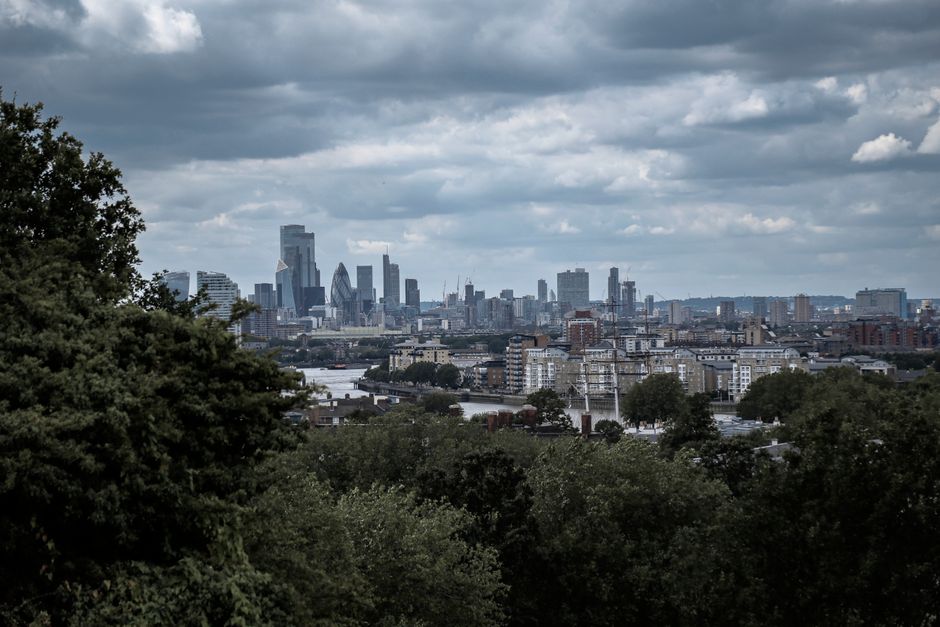
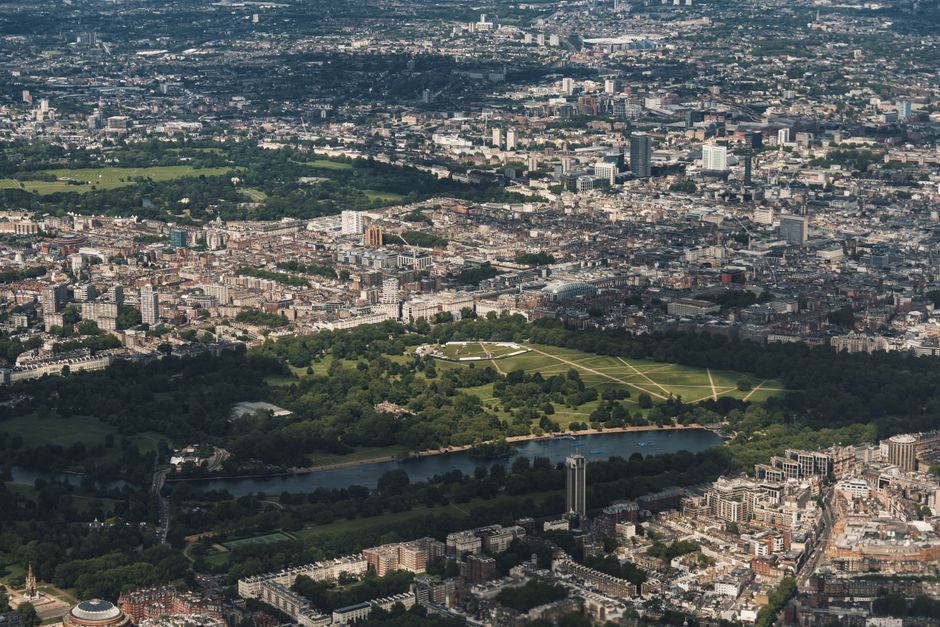
Planning departments across London are sitting on a growing problem: duplicate imagery submitted with housing and development applications, sometimes identical renders or photographs recycled from previous, unrelated proposals, is slipping through review processes at multiple boroughs. The issue, long dismissed as a technical nuisance, is now attracting attention from housing reform advocates as the Starmer government pushes councils to approve more homes faster under its revised National Planning Policy Framework.
The pressure to accelerate decisions creates fertile ground for the problem. When planning officers at Tower Hamlets and Southwark — two of the busiest development boroughs in England — are processing hundreds of applications a month, the manual checking of images against prior submissions is, in practice, close to impossible. A residential tower proposal on the Old Kent Road in Southwark, for example, could contain street-scene visualisations lifted from a scheme originally prepared for a site in Salford, and no automated flag would catch it.
What London Is Actually Doing
The Greater London Authority's Planning team, which oversees applications of strategic importance — broadly, schemes of 150 homes or more — does not currently operate a centralised image-verification system, according to publicly available documentation on its planning portal. Sadiq Khan's London Plan, updated in 2021, sets out detailed requirements for the accuracy of heritage impact assessments and Design and Access Statements, but those requirements are written around written accuracy, not visual duplication.
Two initiatives are worth watching. The Planning Advisory Service, a local government improvement body funded by the Ministry of Housing, Communities and Local Government, began a pilot in late 2025 with six London boroughs — including Camden and Lambeth — to test automated document-scanning tools that can flag identical image files across submissions. The pilot runs until December 2026. Separately, the Geospatial Commission published guidance in March 2026 encouraging local authorities to use Ordnance Survey's Verisk data layer to cross-reference site photographs against geotagged reference imagery, though uptake in London remains voluntary and uneven.
Neither initiative is mandatory. Neither covers the roughly 30 other London boroughs processing smaller applications independently.
How Other Cities Are Handling It
New York City's Department of City Planning moved in 2023 to integrate image-hash verification into its NYC Zoning Application Portal, meaning any image submitted to a planning case is automatically checked against a library of previously submitted files. The system, built on open-source perceptual hashing tools, cost the city approximately $2.1 million to implement according to a city budget document published in fiscal year 2024. It does not catch manipulated or lightly altered images, but it does catch verbatim reuse.
Amsterdam's Omgevingsloket — the Netherlands' unified planning permit portal, which the city migrated to fully in January 2025 — takes a different approach. It requires applicants to submit geotagged photographs verified against current aerial imagery held by the Kadaster, the Dutch land registry. If a submitted site photo does not match the Kadaster reference within a defined tolerance, the application is automatically returned. The Dutch system covers the entire country, not just one municipality.
Tokyo's approach is more administrative than technological. The Tokyo Metropolitan Government requires licensed architects to certify in writing that all submitted visuals represent the actual proposed site, carrying professional liability if that certification is false. The certifier's registration number is logged against each application. Enforcement is rare, but the liability mechanism creates a deterrent that London's system, which places no equivalent personal professional obligation on the submitting agent, currently lacks.
London is not alone in moving slowly. Paris and Berlin both rely primarily on manual officer review for image accuracy, though Berlin's Senate Department for Urban Development is understood to be evaluating digital verification tools as part of a wider planning digitisation programme expected to report later this year.
For applicants, architects and planning consultants working in London right now, the practical reality is straightforward: the onus remains almost entirely on the submitting party to ensure accuracy. Boroughs including Islington and Greenwich have updated their pre-application advice notes in 2025 to explicitly warn that inaccurate or misleading imagery can constitute grounds for refusal or, in egregious cases, referral to the Architects Registration Board. Anyone preparing a submission for a contested site — Elephant and Castle, for instance, or the Silvertown area in Newham — would be wise to document the provenance of every image before it goes anywhere near a planning portal.