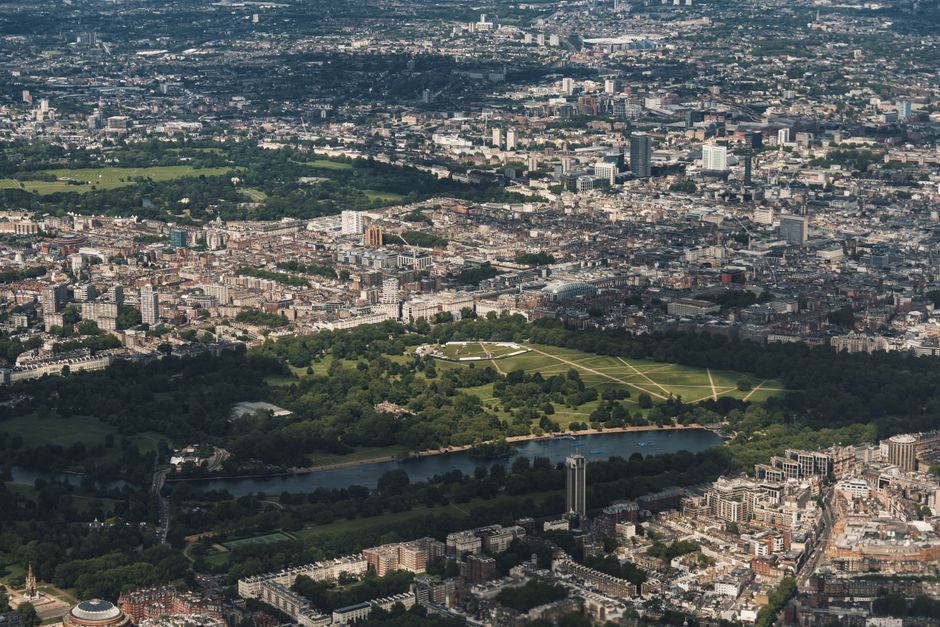
London's planning authorities are dealing with a surge of duplicate and incorrectly filed images clogging their digital application systems, a problem that came into sharp focus this week after several borough councils flagged processing delays linked directly to misfiled visual documentation. The issue affects everything from small household extension requests to major commercial redevelopment proposals, adding days or weeks to decision timelines at a moment when the Starmer government is under enormous pressure to accelerate housing delivery.
The timing matters. The government's Planning and Infrastructure Bill, currently progressing through Parliament, is built on the promise of faster, more efficient local decision-making. Any drag on council processing capacity undermines that argument before the legislation even clears the Lords. Housing delivery targets for London — 88,000 new homes per year, according to the Greater London Authority's current figures — depend on planning departments running without friction. Duplicate imagery in application portals is friction, and this week it became visible enough to demand a response.
What Went Wrong and Where
The practical problem is straightforward. Applicants submitting through the Planning Portal, the national online gateway used by all 32 London boroughs, sometimes upload identical image files multiple times — either by accident or because the system fails to flag a duplication on upload. Those duplicate files then sit in the case officer's queue, requiring manual review before a decision can progress. Southwark Council's planning team acknowledged this week that certain high-volume application categories, including permitted development queries in the Old Kent Road regeneration corridor, had seen processing times stretch beyond the standard eight-week target partly because of document-management issues of this type. Hackney Council, which handles a dense volume of applications across Dalston, Hoxton and the Shoreditch fringe, has been piloting an automated deduplication tool since May 2026 in partnership with the Local Digital Collaboration Unit, a Cabinet Office-backed programme designed to share software solutions across councils.
The Historic England register of listed buildings adds another layer of complexity. Applications touching properties on that register — and London has more listed structures than any other English city — require supporting photographs taken to specific standards. When those image files are duplicated or misfiled, heritage officers at bodies including the Victorian Society and the Twentieth Century Society, both headquartered in London, have to request resubmission. That resubmission clock effectively resets parts of the statutory consultation period.
The Cost in Time and Money
A 2025 review by the Planning Advisory Service found that document-management errors, including duplicate uploads, contributed to roughly 14 percent of applications missing their statutory determination deadline across English councils. That figure, drawn from a sample of 47 local planning authorities, has been cited in internal briefings by the Greater London Authority as a benchmark for understanding London's own performance gap. Each missed deadline costs a council money — under the government's recently tightened performance framework, authorities that fail to determine a set percentage of major applications on time risk losing Planning Performance Agreement income.
The Planning Portal itself is managed by TerraQuest Solutions, a private company contracted by the Ministry of Housing, Communities and Local Government. TerraQuest has been developing a file-validation update intended to reject exact duplicate uploads at the point of submission. According to documentation published on the Planning Portal's developer blog in June 2026, that update is scheduled for a phased rollout beginning in the third quarter of this year, with full deployment expected before December.
For applicants and architects operating out of offices in places like the Barbican, Clerkenwell or along the South Bank's cluster of design studios, the practical advice from planning consultants this week is consistent: audit your upload folder before submission, use unique filenames that include the drawing revision number, and check that your agent's login on the portal shows only one instance of each document in the file list before hitting submit. It will not fix the underlying system problem, but it will keep individual applications moving. The broader fix — a portal that catches duplication automatically — is promised by the end of the year. Whether the rollout keeps to that schedule will be watched closely by borough planning chiefs who have run out of patience for manual workarounds.