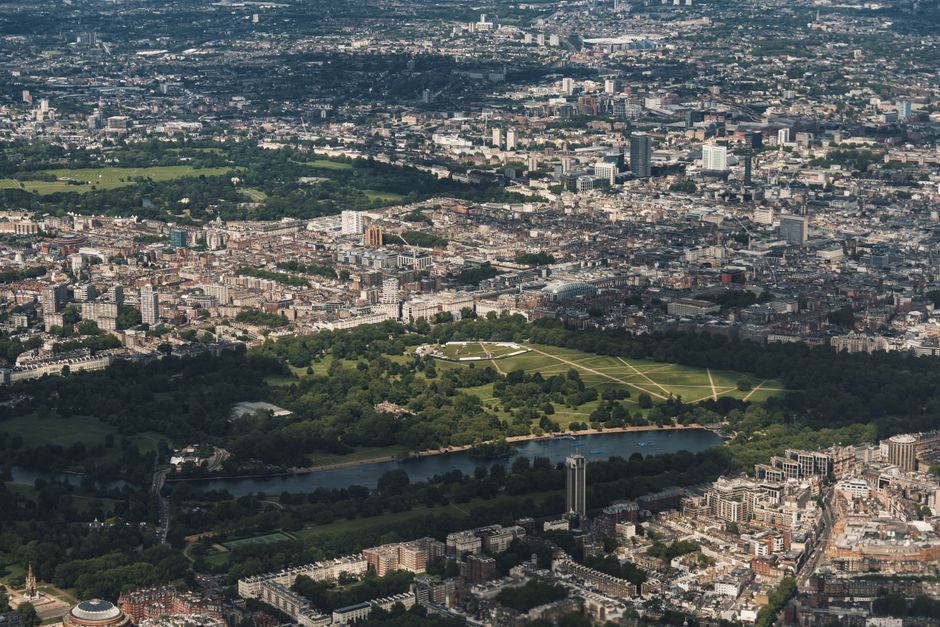
London's planning system has a document problem. Across multiple borough councils, duplicate images submitted in planning applications — identical photographs, recycled site photos, mislabelled heritage assessments — have been quietly undermining the integrity of decisions on some of the capital's most sensitive development sites. Now, with the Labour government's Planning and Infrastructure Bill moving through Parliament, the pressure is on to fix it before a wave of new applications arrives.
The issue matters now because the stakes have never been higher. Sadiq Khan's London Plan already struggles to absorb tens of thousands of housing applications annually, and the Starmer government's push to build 1.5 million homes nationally by 2029 means local planning authorities are facing unprecedented volume. When duplicate or misrepresented images slip through, committees vote on sites they haven't actually seen. Appeals follow. Projects stall. In a city where a single Southwark street can host a conservation area, a listed building and a housing zone simultaneously, that kind of error is not a paperwork nuisance — it can kill a scheme or, worse, approve the wrong one.
Where the Problem Is Surfacing
Tower Hamlets Council and Lambeth Council have both updated their validation checklists in the past eighteen months, requiring applicants to embed unique metadata tags in submitted photographs. The Greater London Authority's Development and Infrastructure Coordination team has flagged duplicate image submissions as a recurring concern in pre-application guidance issued to major developers working along the Thames Riverside corridor, stretching from Battersea to Greenwich. Historic England's London office, based in Cannon Bridge House near Cannon Street, has separately noted the problem in its feedback to boroughs handling Grade II listed building consent applications, where recycled photographs from previous consents are sometimes submitted for new works.
The Planning Portal — the national online submission system used by every London borough — does not currently run automated duplicate-image detection at the point of upload. That means the burden falls entirely on planning officers, who are already stretched. London's thirty-three boroughs collectively employed around 1,800 planning officers as of the most recent local government workforce survey, a figure that has stayed largely flat even as application volumes have climbed.
Hackney Council introduced a requirement in January 2026 that all site photographs in major applications carry GPS coordinates embedded in the image file. Islington followed with a similar rule in March. Neither borough has yet published data on how many previously submitted applications would have failed under the new standard, but planning officers in both authorities have described the validation process as significantly more robust since the changes came in.
What Needs to Be Decided — and By Whom
Three decisions will define what happens next. First, the Planning Inspectorate needs to clarify how it will treat appeals where duplicate image submissions are later identified — whether they constitute a material procedural error sufficient to reopen an inquiry. No formal guidance exists yet. Second, the Planning Portal's operator, the Planning Software Working Group, is understood to be evaluating automated hash-matching technology that could flag identical image files at upload, but no deployment date has been confirmed. Third, the GLA must decide whether to make metadata-verified photography a standard requirement across all major applications submitted under the London Plan's Stage 2 referral process, rather than leaving it to individual boroughs.
The government's Planning and Infrastructure Bill, currently at committee stage in the House of Commons, does not specifically address image verification. Campaigners arguing for stronger transparency rules — including the Town and Country Planning Association, based in Artillery Row, Westminster — have urged ministers to include digital document integrity standards in the secondary legislation expected to accompany the Bill.
For developers and their agents, the practical advice is straightforward: assume the standards Hackney and Islington have adopted will spread borough by borough over the next twelve months, and begin embedding GPS metadata and unique identifiers in all site photography now. For councils, the question is whether to act individually or lobby the GLA for a single, consistent London-wide standard before the next surge of applications — expected when the Planning and Infrastructure Bill receives Royal Assent, likely in late 2026 — hits the system all at once.