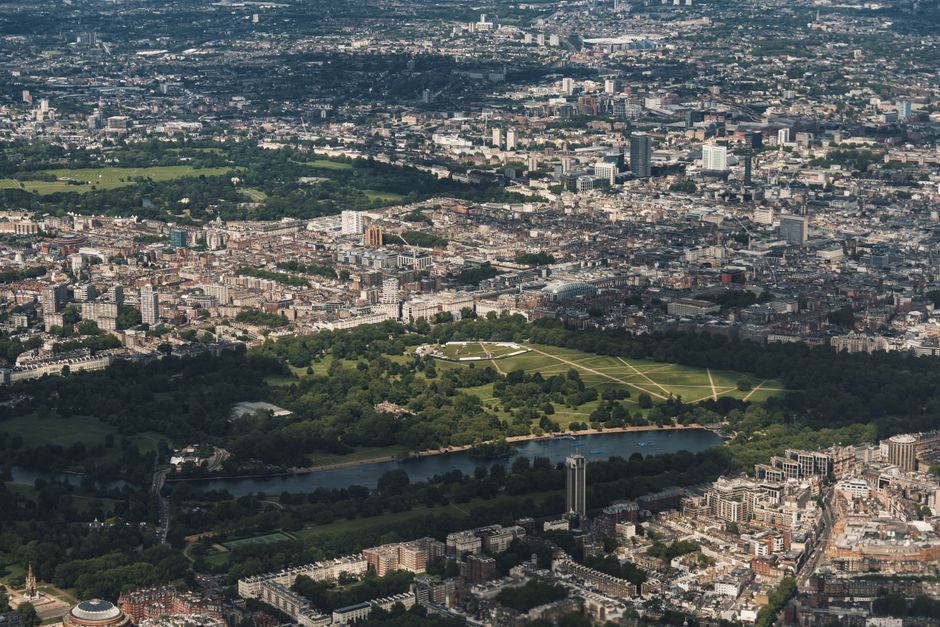
London's planning authorities are sitting on a growing administrative problem. Duplicate images — photographs, architectural drawings and site survey visuals filed multiple times across borough planning portals — are clogging digital archives used to assess everything from a Hackney loft conversion to a major Thames waterfront development. The question now is who fixes it, how fast, and at what cost to already stretched council budgets.
The issue has sharpened in 2026 because of timing. The Starmer government's Planning and Infrastructure Bill, advancing through Parliament this summer, is designed to accelerate housing approvals across England. That means planning officers are under more pressure than ever to process applications quickly and accurately. Duplicate imagery within case files creates real risk: officers working under deadline can mislabel a revised elevation drawing as identical to an earlier one, or approve a plan based on superseded visual evidence.
Where the Problem Bites Hardest
Two boroughs are dealing with this most visibly right now. In Tower Hamlets, where the council is managing more than 4,200 live planning applications as of this spring — many tied to the Blackwall Reach regeneration scheme and developments along the Limehouse Cut — planning case officers have flagged duplicate submissions as a recurring administrative burden. The borough's planning portal, like most in London, runs on software that does not automatically detect image duplication at file ingestion, meaning the work falls to humans.
In Southwark, where the council is overseeing a pipeline of major schemes around the Old Kent Road Opportunity Area, the document management challenge is similarly acute. Old Kent Road is one of the largest regeneration corridors in London, with planning frameworks dating back to 2017 now generating amended and re-amended image submissions that have accumulated across multiple application versions.
The Greater London Authority's Planning team, which handles strategic applications of significant scale — broadly those above ten storeys or over 150 units — uses a separate document management system from individual boroughs. That mismatch means images submitted first to a borough and then re-submitted to City Hall in a joint process can exist in duplicate across two separate databases with no automatic reconciliation.
The cost of manual image auditing is not trivial. Planning departments across England were already reporting a shortfall of qualified planning officers before this year — the Royal Town Planning Institute estimated in 2025 that England needed roughly 8,000 additional planners to meet the government's housebuilding targets. Diverting officer time to image deduplication compounds that shortage directly.
The Decisions That Must Be Made Before Autumn
Three choices are coming to a head before the end of the third quarter. First, boroughs must decide whether to invest in automated deduplication software — tools that use perceptual hashing to identify visually identical or near-identical image files. Several suppliers are already in procurement conversations with London councils, though contract values and timelines have not been made public.
Second, the GLA and the Planning Inspectorate need to agree on a shared data standard for image submission. Without a common file-naming convention and metadata protocol, deduplication remains a borough-by-borough patchwork. The GLA's London Plan 2021 includes digital submission requirements, but image metadata standards are not yet mandated.
Third — and most consequentially for developers — the sector needs clarity on liability. If a planning decision is later challenged on the basis that officers worked from a duplicate or superseded image, who carries that legal exposure? The applicant, the agent, or the council? That question does not yet have a settled answer in English planning law.
For Londoners watching the housing crisis, this is not an abstract IT question. Every week of delay in processing applications — for good reasons or bad — means fewer homes approved. The government has set a target of 1.5 million new homes across England by 2029. Getting the paperwork right, including the images, is a prerequisite for getting anywhere near that number. Councils that move quickly on deduplication protocols this summer will be better placed when the Planning and Infrastructure Bill comes into force, likely in early 2027.