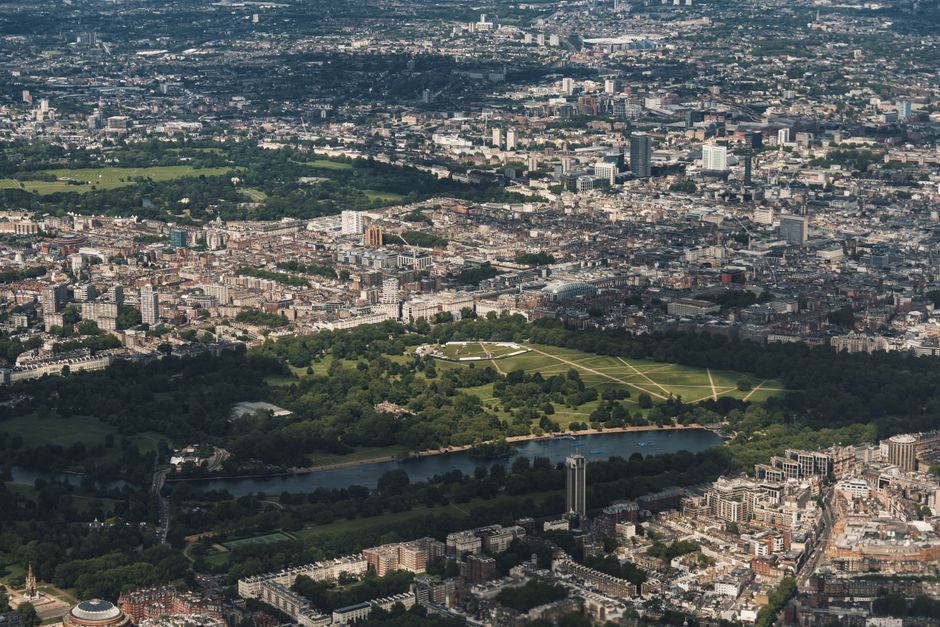
Thousands of duplicate images are clogging London's public planning portals, slowing down applications and frustrating architects, developers and residents who rely on accurate visual records to navigate the capital's notoriously complex system. The problem is not new — but the pressure to fix it has intensified as the Labour government pushes planning reform to the top of its legislative agenda in 2026.
Every London borough maintains its own planning portal, and the fragmentation shows. Duplicate site photographs, outdated elevation drawings and redundant scanned documents have accumulated for years across systems run by councils from Hackney to Hammersmith. In some cases, the same image appears four or five times against a single application record, inflating file sizes and making searches slower. It is an unglamorous problem, but it has real consequences for a city the government says must approve more housing faster.
What London Is Actually Doing About It
The Greater London Authority's Planning Data Unit, based at City Hall on the South Bank, began a formal deduplication audit in January 2026, working initially with three pilot boroughs — Tower Hamlets, Southwark and Brent. The programme uses automated image-matching software to flag near-identical files before human reviewers confirm deletions. The GLA has not yet published completion figures for the pilot, but the programme is understood to be running against a target completion date in the fourth quarter of this year.
The London Legacy Development Corporation, which oversees planning in the Queen Elizabeth Olympic Park area in Stratford, has separately been digitising its own archive since 2024 as part of a broader move to a cloud-based document management system. That project was cited in a March 2026 report by the Planning Advisory Service as an example of good practice in digital record hygiene — though the report noted that legacy image duplication remained a challenge across most English local authorities.
Planning software supplier iStride, which provides document management tools to several London boroughs, said the problem stems partly from a decade of scanning backlogs and partly from applicants submitting the same supporting images in multiple document types — design-and-access statements, heritage assessments and environmental reports often carry identical photographs of the same site facade.
How Amsterdam, Singapore and New York Compares
London is not alone, but it is behind. Amsterdam's Omgevingsloket — the Dutch national planning portal — completed a system-wide image deduplication exercise in 2023, having moved all municipal planning data onto a single federal infrastructure under the Environment and Planning Act that took effect that year. The result was a reduction in total portal file storage of roughly 34 percent, according to figures published by the Dutch government's digital infrastructure directorate.
Singapore's Urban Redevelopment Authority has operated a unified digital planning submission system since 2018, meaning duplicate image problems were largely designed out before they could accumulate at scale. Applications are submitted through a single gateway — CORENET X — which validates file uniqueness at the point of upload.
New York City is closer to London's position. The Department of Buildings' DOB NOW portal, which handles applications across all five boroughs, still carries significant legacy duplication in its pre-2017 paper-scan archive. The city allocated $4.2 million in its fiscal year 2026 budget toward ongoing digitisation, but deduplication of historical image records was not a stated priority in that funding round, according to budget documents published by the New York City Office of Management and Budget.
The comparison matters because London's planning system is under more political pressure than at any point in recent memory. The government's Planning and Infrastructure Bill, currently progressing through Parliament, aims to accelerate approvals — but a system burdened by poor data quality undermines that goal before a single additional home is approved.
For developers and architects working on applications in boroughs not yet covered by the GLA pilot, the practical advice is straightforward: submit image files with clear, unique file names and avoid repurposing the same photograph across multiple supporting documents within a single application. Borough planning departments in Camden and Islington have both issued informal guidance to this effect in recent months, asking applicants to consolidate visual evidence into a single design-and-access statement rather than repeating images across attachments. The GLA pilot, if successful, is expected to be rolled out to all 32 London boroughs by mid-2027.