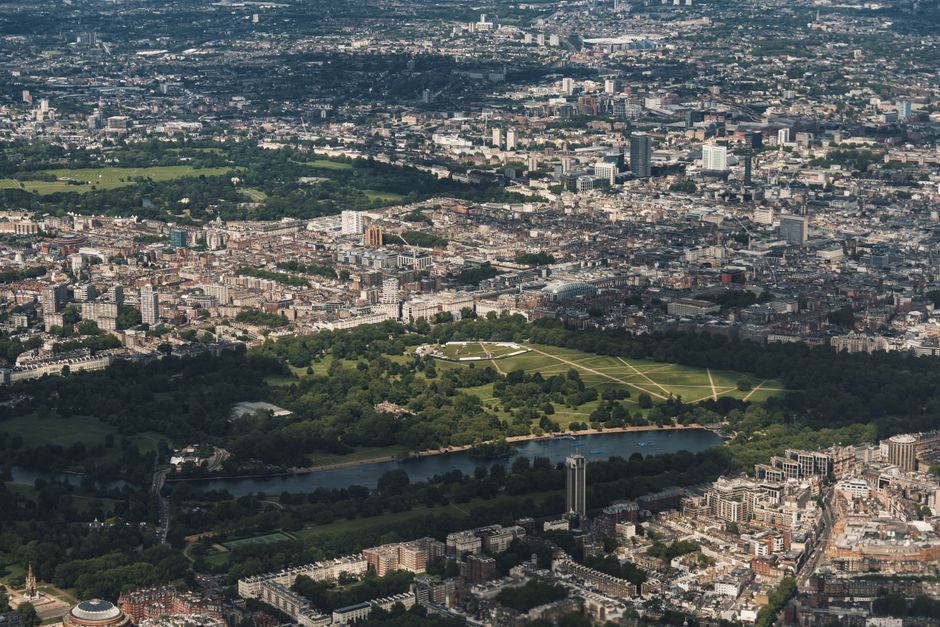
London's 33 planning authorities are sitting on a backlog of applications slowed, in part, by one of the most mundane administrative failures imaginable: developers routinely submitting the same photograph multiple times under different file names, creating duplicate image records that case officers must manually identify and clear before an application can progress. The problem is not new, but pressure from the Starmer government's planning reform agenda has finally pushed it into sharp focus.
The immediate trigger is the Planning and Infrastructure Bill, introduced in early 2025 and still moving through Parliament, which sets binding timelines for local planning authorities to process major applications. Boroughs that miss those targets face financial penalties. That has forced councils across London to look hard at exactly where their pipelines are clogging — and duplicate digital submissions keep appearing near the top of the list.
How the Problem Accumulated Over 20 Years
The roots run back to 2004, when the Office of the Deputy Prime Minister first required planning applications to be submitted digitally. The directive standardised the fact of digital submission but said almost nothing about file naming conventions, image resolution caps, or duplicate-checking protocols. Every borough implemented its own version of the rules. By the time the Planning Portal — the national online gateway used by most applicants — became dominant in the early 2010s, the damage was already embedded in local authority workflows.
Developers, and particularly large consultancies operating across multiple sites, fell into the habit of pulling images from shared internal libraries and uploading them without auditing for duplication. A photograph of a streetscape on Tooley Street in Southwark, used in three separate applications for neighbouring plots, might arrive at the council under three different file names generated automatically by different members of the same project team. The case officer sees three images that look similar but cannot assume they are identical without checking — a process that, multiplied across hundreds of live applications, consumes significant staff time.
The Greater London Authority flagged the issue in its 2022 review of the London Development Database, noting that image-related data quality problems were affecting record accuracy across multiple boroughs. Tower Hamlets and Lambeth both identified duplicate media files as a factor in their application processing audits, according to planning committee papers published that year. Neither council has put a precise cost figure on the problem in public documents, but both described it as a workflow inefficiency requiring a technical fix.
What the Reform Push Is Forcing Councils to Do Now
The Planning Portal upgraded its back-end infrastructure in late 2024, adding automated hash-checking — a standard technique that assigns each file a unique digital fingerprint and flags uploads that match an existing record. In theory, that catches identical files submitted under different names before they reach a case officer's desk. In practice, borough systems have to be configured to act on those flags, and that integration work is still incomplete across much of London.
Hackney Council began a dedicated data-cleaning exercise in March 2026, working back through live applications to remove confirmed duplicate images from the Uniform planning software system it shares with several other inner London boroughs. Islington is understood to be at an earlier stage of a similar exercise, though the council has not made a formal announcement.
For applicants — whether a homeowner adding a rear extension in Peckham or a developer proposing a mixed-use block near Stratford's International Quarter — the practical advice from planning agents is straightforward: audit your image library before submission, ensure every file has a unique and descriptive name, and do not rely on the Portal to catch duplication automatically while borough integrations remain patchy.
The broader stakes are not trivial. The government's own impact assessment for the Planning and Infrastructure Bill estimated that processing delays across English local authorities cost the development sector hundreds of millions of pounds annually in holding costs and financing charges. Duplicate image records are a small slice of that, but fixing them is cheap compared with the fines boroughs will face if major application timelines start being missed from 2027 onwards, when the new statutory deadlines are expected to take full effect.