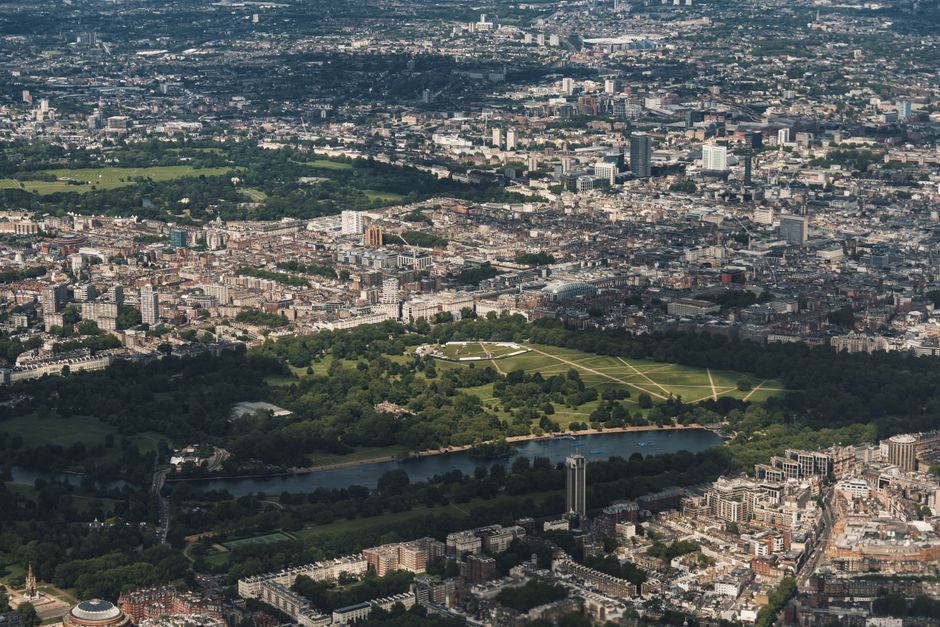
London's planning system is sitting on a significant data integrity problem. Across the 33 borough councils and the Greater London Authority, a substantial share of the capital's live planning applications — many tied to the Starmer government's housebuilding push — carry duplicate, recycled or misattributed site images. The result is that caseworkers, councillors and members of the public are frequently reviewing documents that show the wrong site, the wrong street, or photographs taken years before a demolition.
The issue matters acutely right now because planning reform is central to the Labour government's domestic programme. The Planning and Infrastructure Bill, currently making its way through Parliament, is designed to accelerate the approval of homes across England. Greater London Authority figures from 2025 showed the capital needs to deliver roughly 88,000 new homes per year to meet its housing targets — a pace not achieved in a single recent year. If the application pipeline is contaminated by bad image data, the automated and AI-assisted tools that the government wants to use for faster approvals become unreliable from the outset.
How the Duplication Problem Took Root
The origins are not dramatic. They are administrative. When planning portals shifted from paper-based submission to digital systems — a process that accelerated sharply after the Local Government Act 2000 created new transparency obligations — applicants and their agents began uploading photographs from shared asset libraries. A firm preparing applications for a terrace in Hackney and a warehouse conversion in Bermondsey would sometimes attach the same street-level photograph to both submissions, particularly for pre-application inquiries where detailed photography was considered optional.
Southwark Council, which processes some of the highest volumes of applications in inner London, flagged this pattern internally as far back as 2019 when its planning committee reviewed a contested development near Old Kent Road. Tower Hamlets Planning Service encountered comparable issues during the Whitechapel Road regeneration corridor reviews, where multiple separate applicants submitted identical external photographs of properties that had since been demolished. Neither instance prompted a cross-borough response at the time.
The problem compounded after the 2021 national rollout of the Planning Portal's upgraded digital submission system. Agents working across multiple boroughs discovered they could reuse image uploads without triggering any automated mismatch warning. By 2023, the Planning Portal reported that image-related queries from local authority users had risen, though no disaggregated London-specific breakdown was made publicly available at that point.
Why 2026 Is the Year It Cannot Be Ignored
Three things have converged this year. First, the GLA's new London Plan Implementation Framework, published in March 2026, explicitly requires machine-readable site data — including verified photographic records — as a condition for applications seeking fast-track approval status. Second, the Department for Housing, Communities and Local Government has signalled that boroughs with below-target approval rates may face intervention powers under the Planning and Infrastructure Bill; clean data is now a performance metric, not just a record-keeping nicety. Third, the PropTech sector has matured to the point where companies such as those operating out of the tech clusters around Old Street and Canary Wharf are actively pitching automated image-deduplication tools directly to borough planning departments.
Islington Council began a pilot verification programme in January 2026, manually cross-referencing submitted photographs against Google Street View timestamps and Land Registry records for applications along the Caledonian Road corridor. Early results, shared at a London Planning Officers' Society session in April, suggested that roughly one in eight applications in the tested batch contained at least one image that did not match the stated address or was more than five years out of date.
For Londoners watching the housing crisis from the other side — tenants in Elephant and Castle waiting on affordable unit decisions, or families on Wandsworth's housing register — the practical consequence is delay. Applications kicked back for image correction add weeks to a process already measured in months. The GLA's Planning Datahub project, funded through the 2025 Spending Review, is now working with multiple boroughs on automated verification standards expected to be piloted by late autumn 2026. Until those standards are in place, applicants and their agents are advised to submit georeferenced photographs with embedded metadata, taken within the previous six months, and to maintain a separate image log with each application reference number.