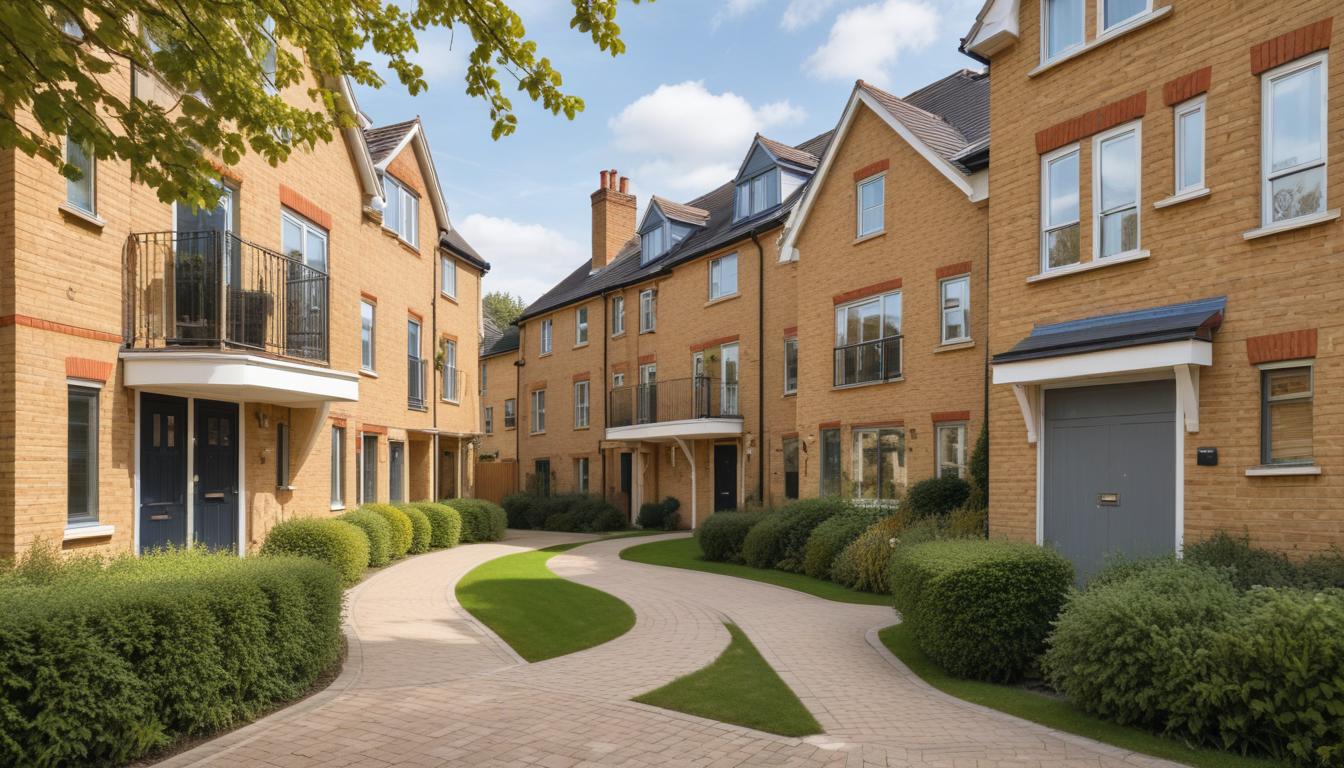
London's rental market is undergoing a visible transformation as major new residential developments come online, yet the relief is unevenly distributed across the capital. With over 45,000 new homes approved in planning pipelines from King's Cross to Croydon, landlords and tenants face a bifurcated landscape: abundant choice in outer zones, persistent scarcity in central corridors.
The Elizabeth Line effect continues to reshape rental economics. New mixed-use schemes around Canary Wharf and Bond Street stations have attracted institutional buy-to-let investors seeking long-term yields, pushing rents 8-12% higher than pre-2024 levels in Zones 1-2. Meanwhile, a tenant seeking a two-bedroom flat in Fitzrovia now faces £2,100 monthly, compared to £1,850 two years ago—a squeeze that has pushed younger renters eastward toward emerging hotspots like Waltham Forest and Hackney, where new aparthotels and purpose-built rental (PBR) schemes are tempering price growth.
The stamp duty reform for buy-to-let investors has reignited landlord confidence, particularly around major transport corridors. Schemes like the Barratt Developments project near Stratford and Countryside Properties' Southall work are attracting portfolio investors, but tenant advocates warn this is primarily benefiting landlords rather than renters. Average London rents now sit 18% above 2019 levels, even as unemployment hovers near record lows.
Not all new supply is equal. Purpose-built rental developments in Zones 4-6—from Croydon's new towers to Barnet's emerging residential clusters—offer better value propositions. A two-bed flat in newly completed schemes near Croydon Town Centre rents for roughly £1,350, undercutting zone-adjacent areas by 25-30%. Yet commute times to central London employment remain prohibitive for many, particularly those working around Canary Wharf or the West End.
Planning officers report approval timelines for residential schemes have accelerated under revised London Plan policies, with aim to deliver 52,000 homes annually by 2028. However, affordability clauses vary wildly. Some boroughs—notably Hackney and Newham—mandate 35% affordable units in new developments, while others negotiate lower percentages or rely on commuted sums paid to housing associations.
For now, competition is quietly reshaping tenant power in outer zones. Landlords advertising vacant units in Zones 5-6 increasingly offer flexible terms and month-to-month arrangements, a marked departure from the take-it-or-leave-it stance of 2023. In the centre, however, the calculus remains tilted firmly toward landlords—and new construction isn't changing that equation fast enough.
This article was compiled by AI from the sources linked above and screened before publishing. See our editorial standards.