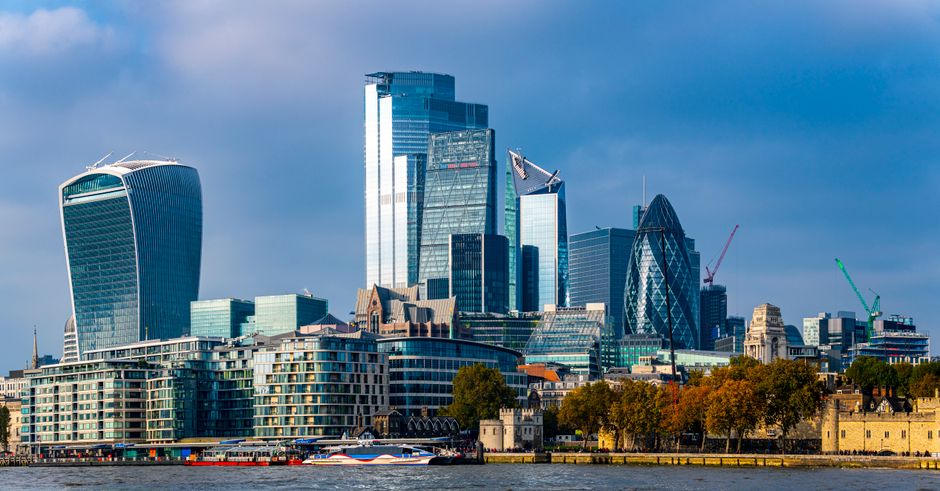
London's startup ecosystem is entering a new chapter. After years of consumer-focused innovation, the venture capital community congregating around Old Street, King's Cross and Canary Wharf is now backing a wave of ambitious product launches designed to reshape entire industries over the next 18 to 36 months.
The shift reflects broader patterns in funding allocation. According to data from London-based research firm Beauhurst, deep tech and infrastructure-focused startups attracted £2.3bn in venture capital during the first half of 2026—a 34% increase from the same period last year. Infrastructure funds, quantum computing initiatives and industrial biotech projects are no longer niche pursuits; they're becoming the default destination for serious capital.
Several high-profile developments are crystallising this transition. Across East London's tech corridor, ambitious founders are preparing commercial releases of AI-powered supply chain optimisation tools, next-generation battery technologies, and satellite-enabled precision agriculture platforms. One venture fund based near the Barbican has assembled a dedicated team focused exclusively on regulatory pathways for deep tech products—a tacit acknowledgment that building these solutions requires more than just engineering talent.
The infrastructure underpinning this next wave is itself evolving. Access to GPU compute, once a bottleneck, has become commoditised through partnerships with major cloud providers. This month, three venture-backed deep tech accelerators across London announced integrated programmes specifically designed to compress the product development cycle from 24 months to 12, effectively doubling velocity for cohort companies.
Yet challenges persist. Early-stage deep tech companies require sustained funding; most cannot achieve profitability within typical venture timescales. This has prompted a recalibration among institutional investors. Family offices and pension funds, previously passive observers, are now active participants in Series A and B rounds across the capital, attracted by longer-term horizons and reduced pressure for rapid exits.
Real estate dynamics are shifting too. Areas around King's Cross and Bethnal Green command premium rents precisely because they offer proximity to both capital and talent pools. However, cost inflation is pushing some teams eastward, towards Stratford and Waltham Forest, where established R&D facilities are being repurposed for hardware prototyping and advanced manufacturing.
By 2027, analysts expect the products incubating now in London's venture-backed labs to begin entering commercial deployment at scale. The roadmap is clear: infrastructure first, profitability later. Whether the capital's funding ecosystem can sustain this patient approach through multiple economic cycles remains the season's defining question.
This article was compiled by AI from the sources linked above and screened before publishing. See our editorial standards.