London's Tech Boom Comes With a Bill Nobody Wants to Pay
The capital's innovation corridor is generating billions and global headlines, but the ethical costs are piling up faster than the valuations.
4 min read
Updated 52 min ago
The capital's innovation corridor is generating billions and global headlines, but the ethical costs are piling up faster than the valuations.
4 min read
Updated 52 min ago

London added 47 new tech companies to its unicorn register in the first half of 2026, according to figures compiled by London & Partners, pushing the city's total past 170 firms valued at over £1 billion. The cluster of offices stretching from Old Street Roundabout through Shoreditch and down into Bermondsey is now the densest concentration of AI and fintech startups outside Silicon Valley. That is the sales pitch. The reality is considerably more complicated.
The timing matters. Khamenei's funeral is drawing global attention to how closed political systems handle succession and dissent, while the UK government has simultaneously gutted an overseas education programme for women and girls after just two years of operation. Both stories underscore something that London's tech boosters prefer to skip past: the technology being built in EC1 and SE1 is not neutral infrastructure. It is deployed by governments, used in conflict zones, and embedded in financial systems that touch the poorest people on earth. The question of who bears the risk when it goes wrong is now impossible to ignore.
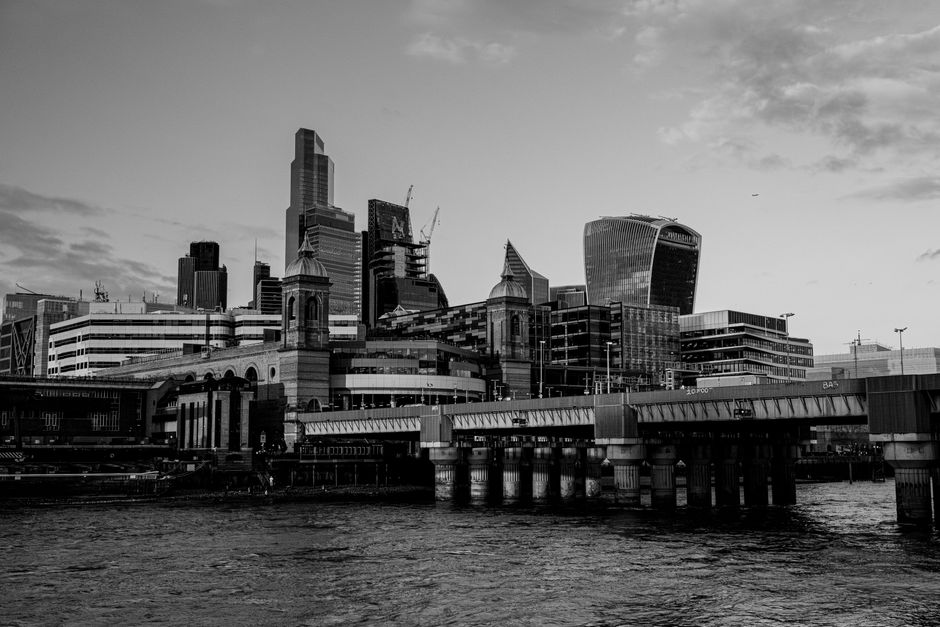
Walk from Silicon Roundabout to Canary Wharf and you are tracing roughly £85 billion in combined private and listed tech valuations. The offices are glossy, the salaries are high, and the pitches to investors are relentless. But the same geography masks a serious concentration risk. Barclays Eagle Labs, which runs accelerator programmes across the UK, reported in March 2026 that 62 percent of its London-based cohort companies rely on a single cloud provider — overwhelmingly Amazon Web Services or Microsoft Azure — for their core infrastructure. A sustained outage, a geopolitical sanctions event, or a regulatory forced-separation could freeze dozens of startups overnight.
The ethical ledger is equally uneven. The Alan Turing Institute on Euston Road, the UK's national centre for data science and AI, published a governance review in May 2026 identifying 14 London-headquartered firms deploying facial recognition or predictive policing tools in jurisdictions with weak judicial oversight. None of those deployments required sign-off from UK regulators under current law. The Product Security and Telecommunications Infrastructure Act 2022 covers device security, not downstream use. That gap remains open.
The Frontier AI Safety Institute, operating out of offices near Victoria Street since late 2023, is expected to publish binding evaluation criteria for large language models by September 2026. That deadline is now politically charged. Several Shoreditch-based AI firms have privately told investors — according to people familiar with those conversations — that compliance costs could add between £200,000 and £500,000 per model release. Smaller studios, particularly those below the 50-employee threshold, say that number is existential.
Meanwhile, the City of London Corporation is pressing ahead with its FinTech Innovation Programme, a £30 million fund announced in January 2026 to attract payment infrastructure companies to the Square Mile. The programme explicitly targets firms displaced by tighter US visa restrictions, which have been pushing European and South Asian founders toward London over San Francisco since early 2025. The opportunity is real. So is the risk that London becomes a regulatory haven by default rather than by design.
For founders and investors navigating this moment, the practical calculus is shifting. Legal teams at firms including those based in the Alphabeta building on Finsbury Square are already pricing AI liability insurance into their Series B rounds — a cost that did not exist in most term sheets 18 months ago. The Institute of Directors, based in Pall Mall, is running a half-day briefing on AI governance obligations on 22 July 2026, specifically targeted at non-executive directors who sit on tech company boards. Attendance, sources say, is oversubscribed.
London's tech sector will not stop growing because the ethical questions are hard. But the firms that survive the next regulatory cycle will be the ones that treated those questions as engineering problems worth solving, not footnotes buried in a risk disclosure filed with Companies House.



About this article
Published by The Daily London
Spread the word
Daily brief
Free, in your inbox before 7am. Weekdays.
Before you go
The day's London news in a 2-minute read. Free, weekday mornings.