Wellness
How to Start a Walking Group in Your Neighbourhood
From Hackney to Hammersmith, Londoners are building community one step at a time — and the barriers to starting your own group are lower than you think.
4 min read
Updated 57 min ago
Wellness
From Hackney to Hammersmith, Londoners are building community one step at a time — and the barriers to starting your own group are lower than you think.
4 min read
Updated 57 min ago
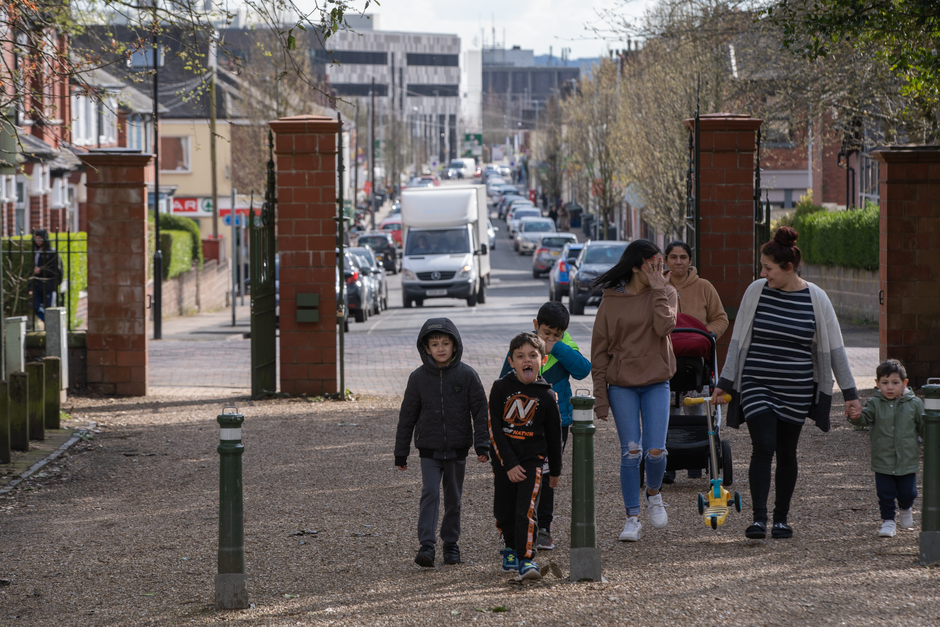
The number of active walking groups registered with Walk London has grown by 34 percent since 2023, according to the organisation's own figures published this spring. That number matters because it reflects something shifting quietly across the capital: people are not waiting for a gym membership or a formal programme. They are knocking on neighbours' doors, posting in WhatsApp groups, and simply showing up at the park gate on a Saturday morning.
The timing is no accident. GP waiting lists in several London boroughs still stretch beyond three weeks for routine appointments, and NHS England's own 2025 annual report flagged physical inactivity as a contributing factor in roughly 1 in 6 deaths in the country. Walking costs nothing and requires no equipment. For millions of Londoners, a regular group walk has become the most accessible form of preventive health care available. Please do speak to your GP before beginning any new exercise regime if you have existing health conditions.
Start with what already exists in your postcode. Parkrun UK operates 22 free weekly events across London every Saturday at 9am, from Bushy Park in Teddington — where the movement was born in 2004 — to Victoria Park in Hackney. Many of those events already have volunteer walk-leaders who complete the 5km course on foot rather than at a run. Plugging into that infrastructure first gives you a ready-made community before you attempt to build your own.
Walk London itself coordinates eight long-distance routes across the capital, including the 78-mile Capital Ring and the 15-mile Jubilee Greenway, and offers a free group leader toolkit downloadable from its website. The toolkit covers liability basics, route-planning templates, and advice on keeping pace inclusive for mixed-ability walkers. The Royal Parks charity, which manages nearly 5,000 acres of green space including Hyde Park, Regent's Park and Greenwich Park, also runs a guided walks programme and lists partner community groups on its website — a useful starting point for anyone in zones 1 and 2.
Neighbourhood-level groups tend to thrive in areas with good existing infrastructure. Residents around the Quietway 1 cycling corridor between London Bridge and Greenwich have reported informal walking groups piggy-backing on the route's clear signage and low traffic. Peckham Rye Common in Southwark and Hampstead Heath in Camden both show up repeatedly in community health surveys as anchor locations for self-organised walking activity.
Registering as a community group is optional but worth doing. Groundwork London, the environmental charity operating across 16 London boroughs, can connect new groups with small grants — some as low as £250 — through its Green Spaces programme. That money typically covers printed route maps, high-visibility vests, and a basic first-aid kit. It is not a large sum, but it gives a fledgling group the look of something organised and the feel of something permanent.
Set a fixed day, time and meeting point from the start. Groups that vary their schedule in the early weeks rarely survive past month two. A 60-minute walk covering roughly 4km is the sweet spot for a mixed-ability urban group — long enough to be worth attending, short enough that people with caring responsibilities or demanding jobs can commit without anxiety. End near a café where people can choose to stay on, and many will. That social tail is frequently what turns a one-off walk into a fixture.
Promote through hyperlocal channels before anywhere else. Nextdoor, local Facebook groups, and flyers in independent cafés and libraries consistently outperform broad social media posts. Stoke Newington Library and the Brixton Recreation Centre both have community notice boards that still generate real foot traffic, according to their respective community outreach coordinators.
The first walk will almost certainly be small. Six people on week one is a success. The point is to begin, hold the date the following week regardless, and let word spread slowly. That is precisely how most of London's enduring community fitness rituals — including Parkrun itself — actually started.

Wellness

Wellness

Wellness
Wellness
About this article
Published by The Daily London
Spread the word
Daily brief
Free, in your inbox before 7am. Weekdays.
Before you go
The day's London news in a 2-minute read. Free, weekday mornings.