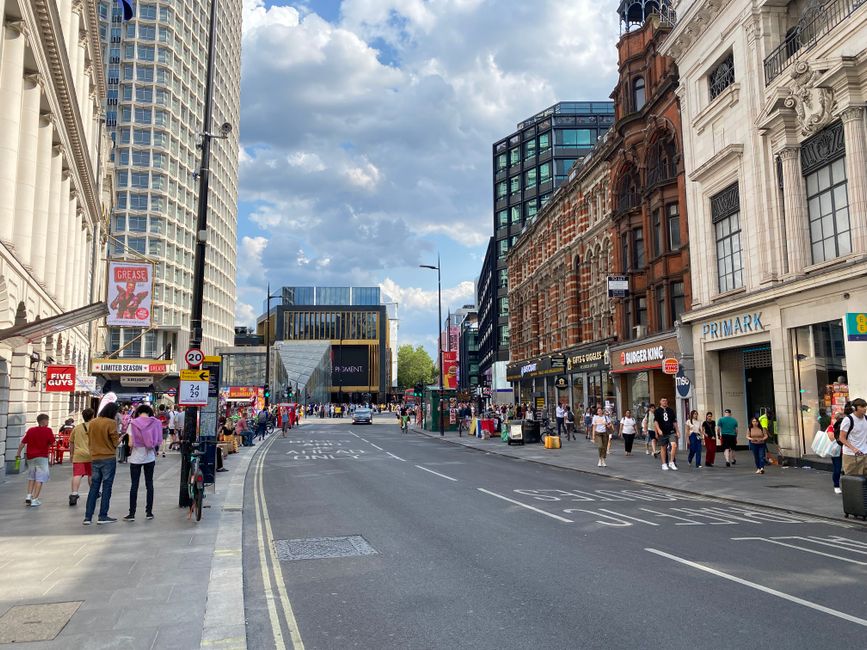
Walk from Covent Garden to Seven Dials, and you'll cross three different worlds in ten minutes. This is London's secret advantage: a sprawling capital that somehow feels like a collection of small towns, each with its own character, economy, and social fabric. While New York has its boroughs and Paris its arrondissements, neither quite captures what makes London's neighbourhoods genuinely distinctive.
Consider Notting Hill, where a £2.5 million townhouse sits metres from independent bookshops and community gardens that welcome everyone. The annual Notting Hill Carnival—Europe's largest street festival—still draws over a million people, many of them locals who've lived here for decades. Compare that to equivalent neighbourhoods in other cities: New York's Greenwich Village has largely surrendered to corporate homogenisation, while Melbourne's once-bohemian suburbs have become investment vehicles rather than living communities.
What sets London apart is the stubborn persistence of human-scale infrastructure. Brick Lane still hosts independent textile shops and curry houses run by families who arrived in the 1970s. Portobello Road's antique market survives alongside chain retailers. Meanwhile, Hackney's transformation over the past fifteen years shows something rare: organic gentrification tempered by fierce community organisations like Hackney Pirates and local co-operatives that keep creative culture rooted.
The economics matter here. Average rents in Bethnal Green sit around £1,400 monthly for a one-bedroom flat—steep by most standards, yet cheaper than equivalent Brooklyn or Berlin neighbourhoods. More crucially, London's council housing legacy means approximately 24 per cent of the city's residents live in social housing, creating genuine socioeconomic mix on streets where billionaires and benefit claimants are actual neighbours, not theoretical concepts.
Other world cities have gentrified or fossilised their neighbourhoods into tourist attractions. London's boroughs remain genuinely alive—messy, contested, and often contradictory, but alive. Peckham's regeneration happened because young creatives could afford studio space; they stayed because the community fought to keep it real. That's not happening in San Francisco or London's equivalent in the developer's imaginary.
The tube network reinforces this. A fifteen-minute journey connects you to completely different cultural ecosystems. Shepherd's Bush, Islington, Dulwich, Wimbledon—each maintains genuine distinctiveness while remaining integrated into London's larger rhythm. This mosaic quality, preserved partly through accident, partly through stubbornness, is London's defining lifestyle asset.
This article was compiled by AI from the sources linked above and screened before publishing. See our editorial standards.