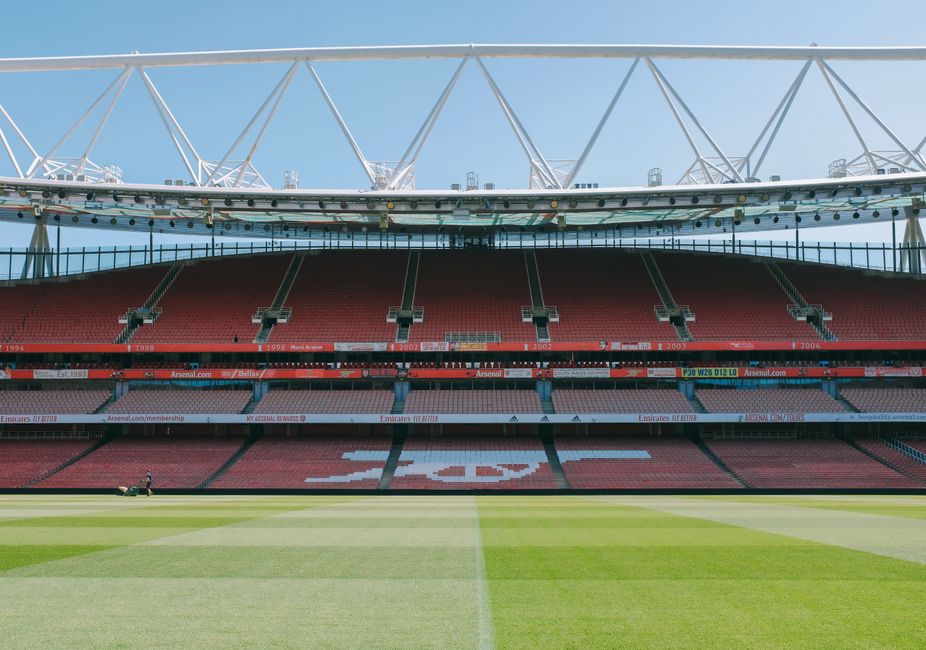
Jude Bellingham came home this week. Not permanently, Real Madrid's £115 million man remains under contract in Spain until 2029, but his presence at St George's Park for England's post-tournament debrief has reignited a very London argument: which of the capital's grounds is best equipped to serve as the stage for the country's most marketable footballer, and for the blockbuster club fixtures that follow a player of his profile wherever he goes?
The timing matters. England reached the quarter-finals of the 2026 World Cup in North America before a penalty exit against France in Dallas on 29 June. The squad is scattered. But the Football Association's commercial team is already working through a fixture calendar that will bring Bellingham's club, Real Madrid, to Wembley Stadium for a pre-season friendly pencilled in for late July, a match expected to sell out the 90,000-capacity ground within hours of tickets going on general sale.
A Tale of Two Ends of London
Wembley gets the glamour. That is the established order. The FA's national stadium, sitting above Wembley Park tube station in HA9, has hosted every England home game since 2007 and generated £56 million in event revenue in the 2024-25 financial year according to the Football Association's most recent published accounts. When Real Madrid arrive, expect corporate hospitality packages on Olympic Way priced north of £800 per head.
But the more interesting infrastructure story is happening at the other end of the District line. Charlton Athletic's Valley ground in SE7 is undergoing a phased redevelopment, the North Stand expansion, approved by Greenwich Council in March 2025, will take capacity from 27,111 to just over 34,000 by the summer of 2027. The club's new ownership group, which completed its takeover in January 2026, has explicitly cited London's lack of a mid-tier 30,000-to-40,000-seat venue as the commercial gap they intend to fill. That tier is where touring clubs below the Champions League elite, and women's game showpieces, currently struggle to find a home.
Crystal Palace's Selhurst Park renovation is further along. The £100 million redevelopment of the Holmesdale Road end, which began in autumn 2024, is due to complete before Christmas 2026, pushing capacity to 34,000. Palace's partnership with the Premier League's No More Red initiative, aimed at engaging young men in south London through sport, means the expanded ground will be used for community football programming on 40 non-matchdays per year, not just ticketed events.
The Bellingham Effect on Ticket Economics
There is a commercial logic to all of this that goes beyond one player. Bellingham's England jersey was the top-selling shirt at the FA's official store on Wembley Way in the six weeks following the World Cup exit, outselling Harry Kane's by a ratio of roughly three to two, according to figures shared informally by FA retail partners. Demand for live football in London has not cooled. Aggregate Premier League attendance across the capital's six top-flight clubs last season was 3.1 million, the highest recorded figure.
The pressure on venues comes from that gap between demand and usable supply. Wembley's calendar is ferociously competitive, it will host four NFL London games in October 2026 before Tottenham Hotspur's ground takes two more, leaving fewer windows than the FA would like for the kind of high-profile club friendlies that generate eight-figure sums in a single evening.
For supporters, the practical reality is simpler. If you want to see Bellingham on a London pitch before the Champions League group stage begins in September, your best chance is registering for the Wembley pre-sale, which opens on 14 July through the England Supporters Travel Club. Expect face-value tickets between £45 and £95, with the secondary market likely to push premium seats past £300 within the first 48 hours. Book early, and book through official channels, the Wembley Box Office on Engineers Way processed over 40,000 fraudulent ticket complaints last year alone.