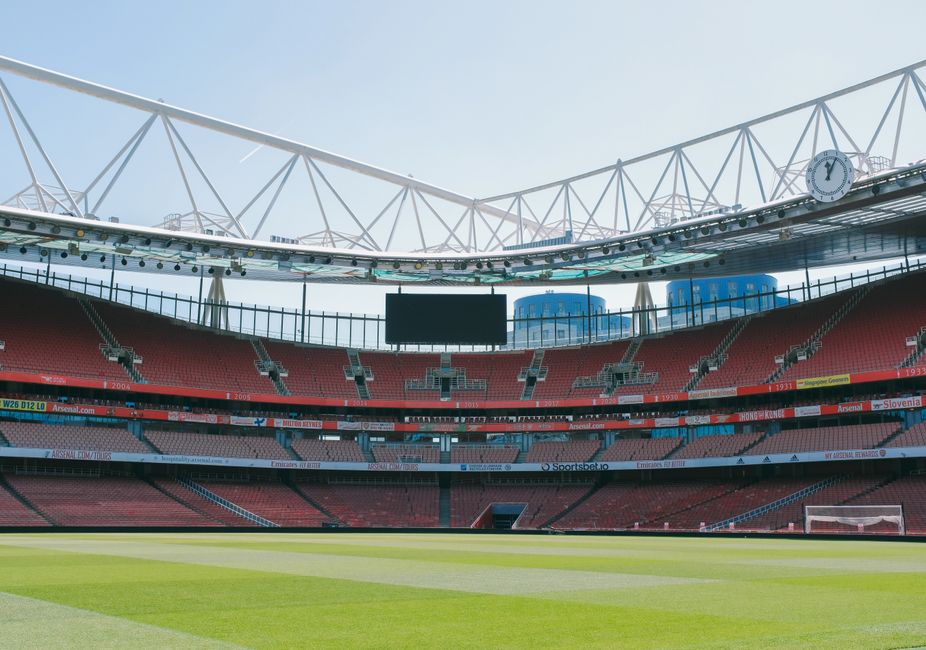
More than 12 million people passed through the turnstiles of London's top-tier sporting venues in the 2025-26 season, according to figures compiled by Sport England's Active Lives survey published last month. But behind that headline number sits a more complicated picture: regular participation in sport and physical activity among Londoners aged 16 and over has barely moved in three years, stuck at around 61 percent — roughly five points below the national target set under the Government's Decade of Sport strategy.
The timing matters. With Wembley Stadium hosting three Euro 2028 qualifying fixtures this autumn and the London Stadium in Stratford locked in as the venue for the 2027 World Athletics Championships, city planners and public health officials are under pressure to demonstrate that elite infrastructure actually shifts behaviour at grassroots level, rather than simply drawing crowds who then return to their sofas.
What The Venues Are Actually Doing
The honest answer is: more than they used to, though critics argue it still falls short. The London Stadium's community programme, run in partnership with the London Legacy Development Corporation, logged 47,000 participant visits to its community athletics track in 2025 — a 14 percent rise on the previous year. The track, which sits on the southern side of the stadium in the Queen Elizabeth Olympic Park, is free to use for under-18s and charges adults £4.50 per session, making it one of the cheapest supervised athletics facilities in east London.
Tottenham Hotspur Stadium in N17 has taken a different approach, embedding a partnership with Haringey Council's Active Haringey programme that targets residents in the Northumberland Park ward — one of the borough's most deprived areas by the Index of Multiple Deprivation. Their weekly 5K run club, which started with 23 participants in January 2025, was attracting more than 200 runners by April this year. Crystal Palace National Sports Centre in Bromley, meanwhile, recently completed a £36 million refurbishment and has reported a 22 percent uptick in first-time gym memberships since reopening its upgraded facilities in February 2026.
These are genuine numbers. But set them against the city's scale — 9.2 million residents — and the arithmetic is humbling. Sport England's own data shows that 2.4 million Londoners currently do fewer than 30 minutes of physical activity per week. That figure has not materially improved since 2022, even as £400 million in public and private investment has flowed into the capital's sporting infrastructure during the same period.
The Postcode Problem
Geography is doing a lot of work in these statistics. Participation rates in Richmond upon Thames and Kingston run above 72 percent. In Barking and Dagenham and parts of Tower Hamlets, the figure drops below 50 percent. The venues generating the best community numbers — the London Stadium, the Tottenham programme — are almost uniformly in areas where the baseline was lowest, which flatters the percentage improvement while the absolute participation gap between wealthy and deprived boroughs quietly widens.
Sport England's London director warned in a briefing note circulated to the Greater London Authority in May that flagship venue investment creates a "proximity halo" effect: residents within a mile or so of a major facility show measurable activity increases; those two miles away and beyond show virtually none. The Central London YMCA on Great Russell Street in Bloomsbury has been making this argument for years, pointing to its own data showing that low-income Londoners cite travel cost as a more significant barrier than membership price.
For anyone looking to take advantage of what does exist: the Queen Elizabeth Olympic Park velodrome offers a £10 introductory track cycling session on Wednesday mornings; the Copper Box Arena runs a subsidised Activate programme for over-50s at £3 per class on Tuesdays and Thursdays; and Arsenal's community arm, Arsenal in the Community, runs free weekday fitness sessions at Highbury Fields in Islington. The data tells us the infrastructure is there. Getting Londoners through the door — all of them, not just those who already would have gone — remains the unfinished business.