Wellness
Gut health 101: fermented foods you can find locally
From Borough Market kimchi to Hackney kefir, London's fermented food scene has quietly grown into one of the most accessible in Europe — and your microbiome is better for it.
4 min read
Wellness
From Borough Market kimchi to Hackney kefir, London's fermented food scene has quietly grown into one of the most accessible in Europe — and your microbiome is better for it.
4 min read
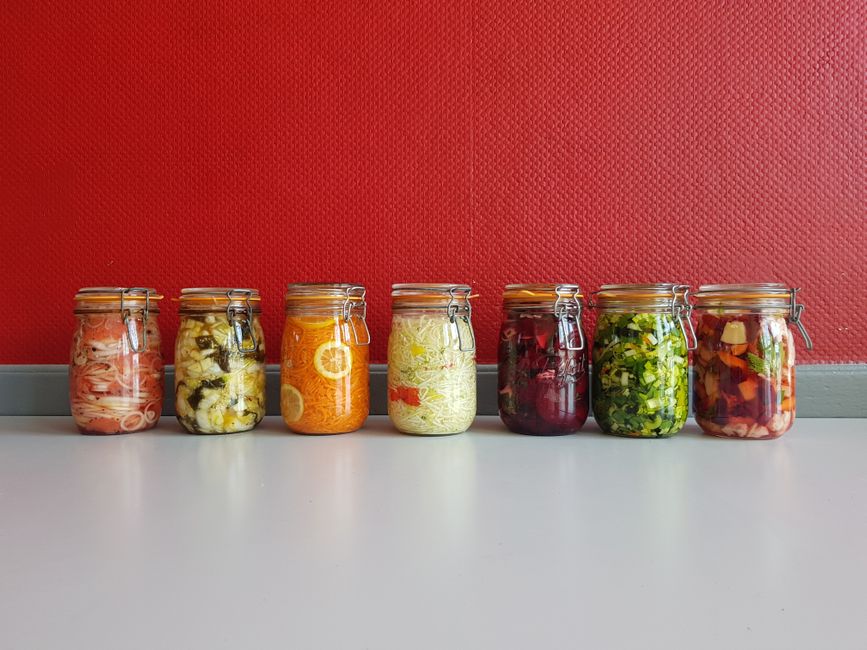
Sales of fermented foods in the UK rose by 34 percent between 2023 and 2025, according to figures from the Food and Drink Federation, and London retailers say demand has not slowed. Walk through Borough Market on a Friday morning and the evidence is hard to miss: three separate stalls now sell live-culture products — sauerkraut, kefir, kombucha, miso — where there was only one four years ago.
The timing matters. Interest in hormonal health, sleep quality and mood regulation has surged this year, driven partly by wider public conversations about how the gut communicates with the brain. Researchers at King's College London's Department of Nutritional Sciences published findings in March 2026 confirming that a more diverse gut microbiome correlates with lower markers of systemic inflammation. Fermented foods, rich in live bacteria and short-chain fatty acids, are one of the most practical ways to improve that diversity without a prescription or a supplement stack.
Not all fermented products are equal. Many supermarket versions of kombucha and sauerkraut are pasteurised, which kills the live cultures that make them useful in the first place. The distinction matters when you are shopping.
Borough Market, SE1, remains the most reliable starting point. Vadasz, a British brand with a permanent unit there, sells unpasteurised sauerkraut and kimchi; their classic sauerkraut runs at £4.50 for 500g. Neal's Yard Dairy, which has a second site on Shorts Gardens in Covent Garden, stocks a rotating selection of cultured dairy including raw-milk kefir sourced from West Country farms. Kefir, a fermented milk drink originating in the Caucasus, delivers roughly ten distinct strains of beneficial bacteria per serving and has been studied extensively for its effect on lactose digestion and gut lining integrity.
East London has developed its own cluster. Whole Foods Market on Stoke Newington High Street stocks Biotiful Dairy kefir — one of the UK's largest kefir brands, founded in London in 2012 — alongside a chiller section of house-made kimchi from local supplier Jarr Kombucha, whose main fermentation facility sits in Hackney Wick. Jarr also runs occasional weekend tours of the brewery, which double as informal education sessions on lacto-fermentation. A 330ml bottle of their raw kombucha costs £2.80 in most independent shops across zones 1 and 2.
For miso and fermented soy products, Japan Centre on Shaftesbury Avenue carries Marukome and Hikari live-culture misos; both labels clearly state they are unpasteurised and should not be boiled, which destroys the active cultures. A 750g tub sits at around £6.99. Brixton Market's covered arcades, specifically the stretch along Coldharbour Lane, also carry a range of West African fermented condiments including locust bean paste and fermented shrimp, ingredients embedded in Yoruba and Igbo cooking traditions that predate any Western wellness trend by centuries.
A landmark 2021 trial from Stanford University, still widely cited in clinical nutrition circles, found that participants who ate a diet high in fermented foods for ten weeks showed a measurable increase in microbiome diversity and a decrease in 19 proteins associated with inflammation. The study used specific daily servings: roughly six portions of fermented food per day, which sounds extreme but translates practically to a morning kefir, sauerkraut alongside lunch, and a small glass of kombucha in the afternoon.
NHS GP surgeries in London boroughs including Lambeth and Islington have begun including gut health guidance in their general dietary advice leaflets since January 2026, though clinicians are careful to position fermented foods as a complement to — not a replacement for — medical treatment for conditions like IBS or Crohn's disease. If you have a diagnosed gut condition, speak to your GP before making significant dietary changes.
The practical entry point is low-cost and local. Buy one live-culture product this week — kefir from a farmers' market, a jar of unpasteurised kimchi, a bottle of raw kombucha — check the label for the words 'live cultures' or 'contains active bacteria', and build from there. London's food infrastructure, from Maltby Street Market to the growing network of zero-waste refill shops across Peckham, makes that easier in mid-2026 than it has ever been.
About this article
Published by The Daily London
Spread the word
Daily brief
Free, in your inbox before 7am. Weekdays.
Before you go
The day's London news in a 2-minute read. Free, weekday mornings.