Wellness
How to start a walking group in your neighbourhood
No app, no membership fee, no lycra required — just a meeting point, a WhatsApp group, and a willingness to show up.
4 min read
Updated 14 min ago
Wellness
No app, no membership fee, no lycra required — just a meeting point, a WhatsApp group, and a willingness to show up.
4 min read
Updated 14 min ago
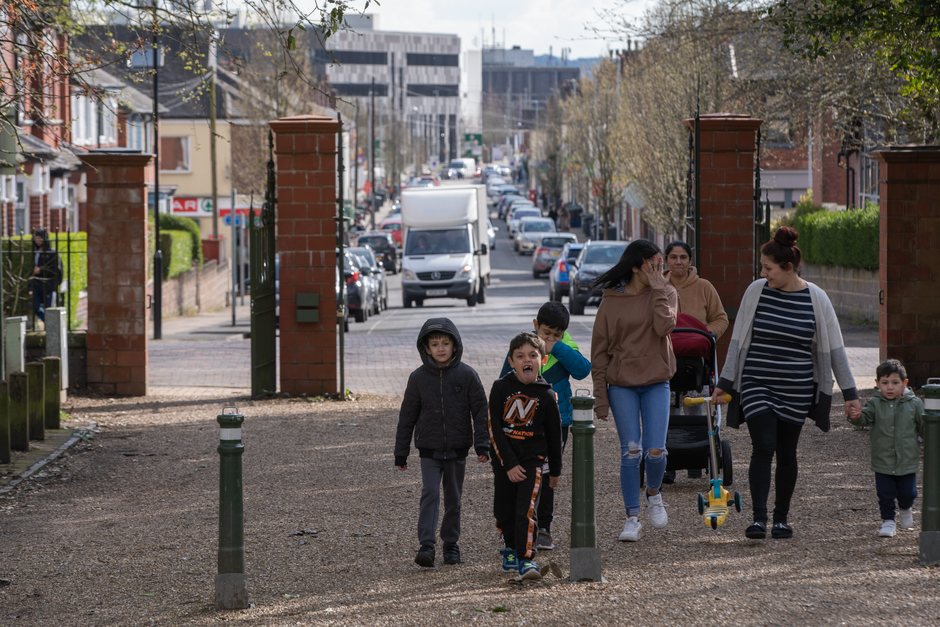
London's pavements are full of solo walkers. The parks are full of solo walkers. And yet loneliness among city adults reached a record high in 2025, with the Campaign to End Loneliness reporting that nearly four million people in England describe themselves as often or always lonely. The gap between those two facts is exactly where a neighbourhood walking group can do its work.
Setting one up is far simpler than most people assume. You do not need insurance, a committee, or a registered charity number to get a small group moving around Hilly Fields on a Tuesday morning. What you need is a route, a time, and a way to tell people about it.
The first practical decision is location. Flat, well-lit, publicly accessible routes work best for mixed-ability groups, which is why so many successful neighbourhood walks in London start from park gates rather than residential streets. Brockley has used the entrance to Hilly Fields Park on Vicars Hill as a gathering point for an informal Saturday walk since 2023. Over in east London, the towpath running from Victoria Park toward Hackney Wick offers a traffic-free 2.5-kilometre stretch that works in almost any weather. Neither location required a permit to use.
Once you have a route, the fastest way to recruit walkers is through existing local networks. Nextdoor, the neighbourhood social platform, currently has active communities in every London borough. Local Facebook groups — search for your postcode plus "community" — typically have thousands of members and a high tolerance for exactly this kind of post. Neighbourhood noticeboards outside libraries and GP surgeries still work, too. Southwark Libraries, for instance, allows community notices at all seven of its branches.
Parkrun UK is worth contacting early. The organisation, which coordinates free timed 5k runs at 230 UK locations every Saturday morning, introduced a dedicated walking category in 2022. Its London coordinator network can point you toward volunteers who have already done the groundwork on route safety and can share template risk assessments free of charge. Many walkers find that joining a local Parkrun event first — Dulwich Park's run starts at 9am every Saturday — gives them an instant pool of people who are already in the habit of showing up outdoors on a regular schedule.
Keep the first walk short. Sixty minutes and roughly four kilometres is enough to let people talk, assess whether they want to come back, and get home without feeling they have over-committed. Announce a fixed weekly time and stick to it. Groups that shift their schedule lose members fast.
WhatsApp remains the most reliable free tool for coordination. Create a group, set the description to include the walk time, meeting point, and a contact number, then share the link on every platform you used to recruit. The Royal Parks Foundation, which manages Hyde Park, Regent's Park, and six other central London parks, publishes a free community-use guide on its website that covers everything from gathering sizes to event insurance thresholds — the threshold for requiring formal event permission is currently 500 attendees, which most neighbourhood walks will never approach.
Accessibility matters from day one. Consider whether the route has dropped kerbs, whether the pace can flex for slower walkers, and whether there is a café or bench stop mid-way. The Café in the Park inside Clissold Park in Stoke Newington, open daily from 8am, has become an unofficial halfway point for at least three local walking groups precisely because it removes the pressure of a fixed end time.
Mental health charities including Mind UK have documented that regular group walking reduces self-reported anxiety scores. A 2024 University College London study found that adults who walked in groups at least once a week reported measurably better mood outcomes than those who walked the same distance alone. The evidence is solid. The barriers to starting are low. Your neighbourhood's walking group probably just needs someone willing to post the first message.
If you have health concerns before starting a new exercise routine, speak to your NHS GP first.
About this article
Published by The Daily London
Spread the word
Daily brief
Free, in your inbox before 7am. Weekdays.
Before you go
The day's London news in a 2-minute read. Free, weekday mornings.