Business
Flexible Office Space London: Shoreditch's New Model
Shoreditch entrepreneur converts Victorian warehouses into flexible workspace for London's creative and fintech sectors, addressing record office vacancy rates.
3 min read
Business
Shoreditch entrepreneur converts Victorian warehouses into flexible workspace for London's creative and fintech sectors, addressing record office vacancy rates.
3 min read
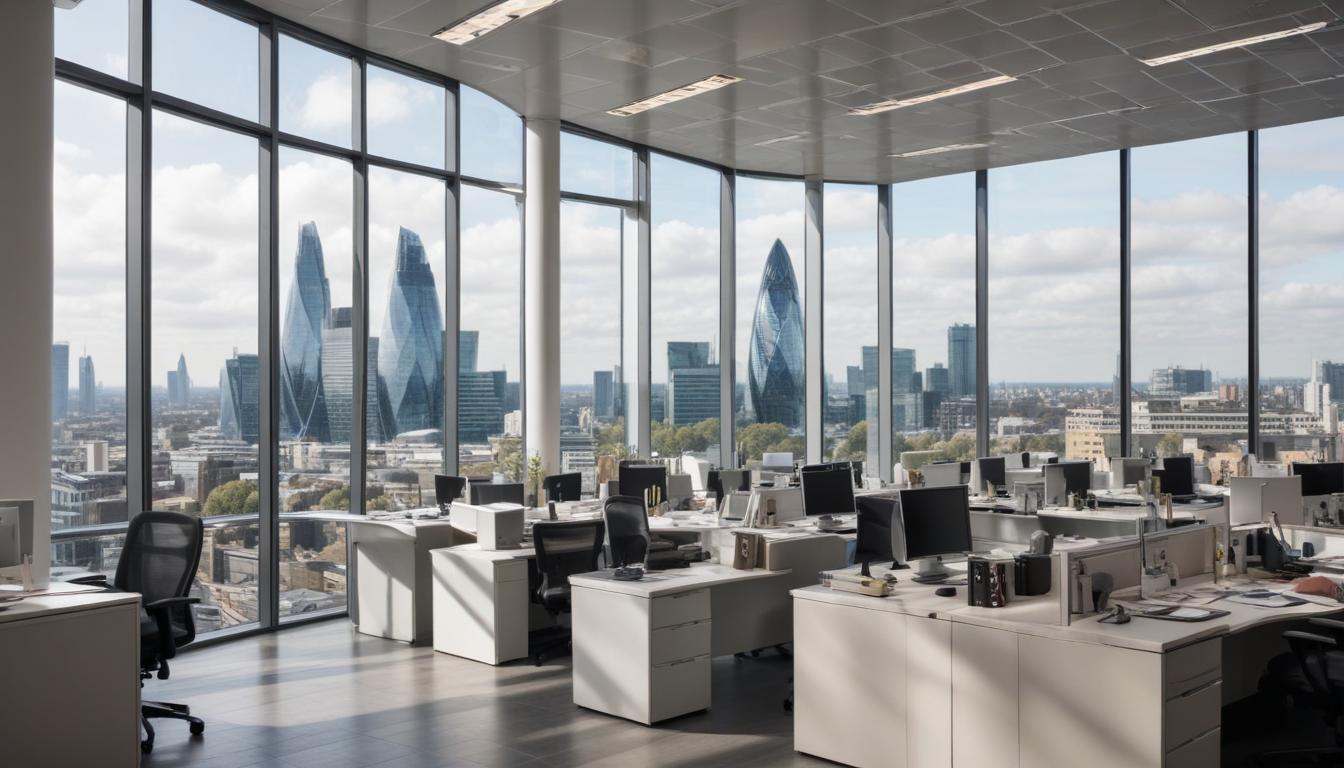
The London commercial property market has been in flux since 2024, with central office vacancy rates hovering around 14%—the highest in two decades. Yet amid this uncertainty, one Shoreditch-based entrepreneur is carving a contrarian path, converting underutilised Victorian warehouses into hybrid workspaces tailored to the creative and fintech sectors.
Across Curtain Road and into the brick-laden streets of Hoxton, former industrial buildings are being reimagined as modular office environments where companies can expand or contract their footprint on monthly terms rather than decade-long leases. The shift reflects a broader realisation among London's property professionals that the rigid, all-or-nothing office model is defunct.
The commercial property sector, which saw prime central London office rents fall to £95 per square foot in early 2025, has been forced to reckon with structural change. Hybrid working has become entrenched; firms increasingly demand flexibility; and the traditional landlord-tenant relationship feels increasingly anachronistic to younger businesses. Against this backdrop, the adaptive workspace model is gaining traction.
What distinguishes this particular operator is a granular focus on neighbourhood character and tenant community. Rather than pursuing generic business parks on the periphery, the strategy centres on preserving London's historic industrial fabric while introducing contemporary amenities: high-speed broadband, collaborative kitchens, and soundproofed meeting pods integrated into period architecture.
The approach has resonated with fintech startups and design agencies seeking alternatives to both traditional offices and generic coworking. Lease terms typically run 12 to 36 months, with pricing around £45 to £65 per square foot depending on location and finish—substantially below West End rates but above what established coworking chains command.
Industry observers note that this model addresses a critical gap in London's post-pandemic property landscape. While mega-landlords like the Derwent group and Shaftesbury navigate portfolio challenges, younger operators with lower cost bases and flexible capital structures can move faster. The City of London Corporation has also signalled support for mixed-use development, creating regulatory tailwinds for adaptive reuse projects across the Square Mile and East London.
Whether this entrepreneurial approach will scale remains to be seen. The broader challenge facing London's commercial property market—surplus space, remote work normalisation, and international economic uncertainty—will not evaporate. But for now, at least, one corner of Shoreditch offers a glimpse of how the office sector might evolve: less monolithic, more locally rooted, and fundamentally responsive to how London's workers actually want to work.
This article was compiled by AI from the sources linked above and screened before publishing. See our editorial standards.
Business
Business
Business
Business
About this article
Published by The Daily London
Spread the word
Daily brief
Free, in your inbox before 7am. Weekdays.
The Daily Network — independent news worldwide